


Aotearoa Before Us I: Our Coasts
- Joseph Nicholson
- Jan 23
- 7 min read

The Landscape
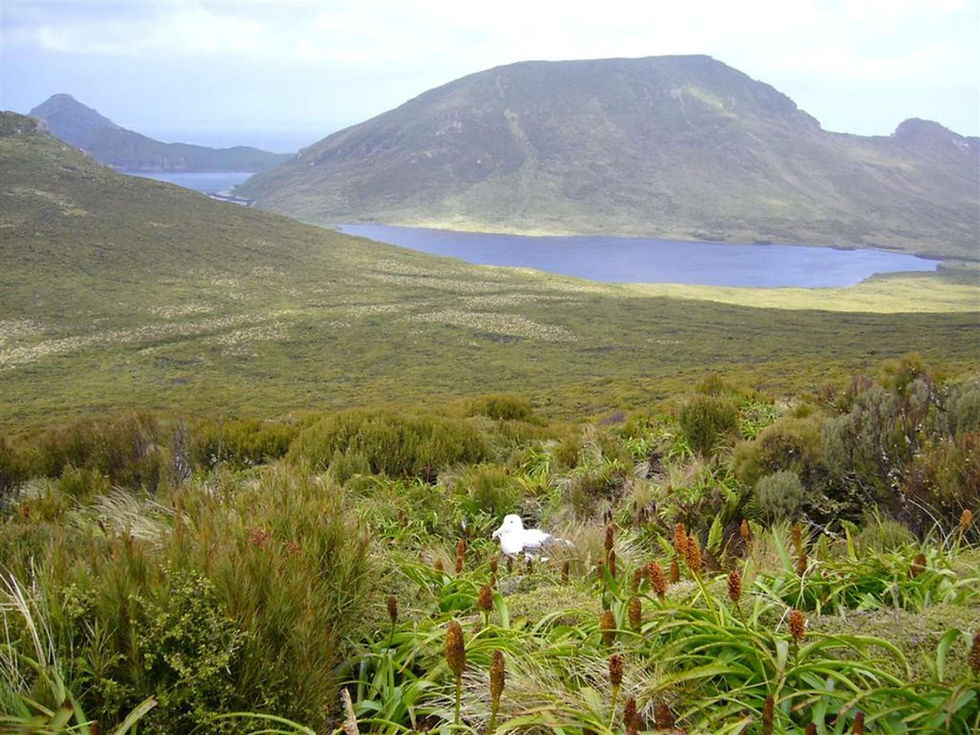
The coasts of Aotearoa were dynamic and constantly changing. They were shaped by the movements of wind and water. Coastlines ranged from vast sand dunes to rocky shores and towering cliffs. Where rivers met the sea, large estuaries formed, creating rich and diverse habitats for wildlife to thrive. There were no roads, dams, seawalls, or other human structures — these environments were shaped entirely by nature.

Large sand dunes lined the coast and, in some areas, extended far inland. These dunes were well-vegetated with native plants such as pīngao (Ficinia spiralis), which trapped sand and held dune systems together. They became habitats for endemic species such as the kātipo spider (Latrodectus katipo) and the Korowai gecko (Woodworthia korowai). Over time, as dunes stabilised, organic layers developed, and some transformed into shrubland and forest ecosystems.
Large estuaries formed where rivers met the ocean, appearing as fords, bays, and mangrove swamps. These were among Aotearoa’s most productive ecosystems, where freshwater and saltwater life met. Microbes naturally filtered water by breaking down organic matter, while pollutants bound to sediments, creating cleaner environments for plants and wildlife. Wetland soils and plants such as mangroves and reeds helped bind sediment, acting as buffers against erosion. They protected coasts and forests from storms by absorbing river floodwaters and ocean surges.
Estuaries provided habitats for thousands of species, including shellfish, crustaceans, molluscs, and worms. Fish such as snapper, kahawai, and gurnard used them as nurseries, while sharks used them as pupping grounds. Migratory species such as freshwater eels and galaxids like the shortjaw kōkopu (Galaxias postvectis) relied on estuaries to move between habitats. Birds now considered rare, such as the kākī / black stilt (Himantopus novaezelandiae), once waded here in flocks of thousands. Migratory birds like the bar-tailed godwit (Limosa lapponica) travelled thousands of kilometres to feed during the New Zealand summer.
Missing Mammals
The coasts would not have been quiet. As we stroll along the shore, we encounter a blackish-brown shape lying on the sand. Suddenly, it stirs to life. A large mane gives it away — a male pākake / New Zealand sea lion (Phocarctos hookeri).

Today, the only seal commonly found along much of New Zealand’s coast is the kekeno / New Zealand fur seal (Arctocephalus forsteri), but historically this was not the case. Pākake are now considered the world’s most endangered sea lion species, yet 1,000 years ago they were widespread along our shores. While large males — weighing up to 400 kg — hauled out on beaches, females often sheltered inland with their pups, protecting them from harsh weather and parasitic infections. Today, most of the population survives in the Subantarctic Islands, with a small mainland population reappearing in the South Island around Otago and the Catlins in the 1990s.
Continuing on, we hear deep, coughing roars echoing along the beach. Ahead, two massive southern elephant seal bulls (Mirounga leonina) clash in a battle for dominance and control of a harem of females. Each male slams into the other with their three-tonne bulk, using sharp canines that leave deep cuts and scars. Today, elephant seals are mostly restricted to the Southern Ocean, but 1,000 years ago they ranged from the Catlins to Cape Reinga, their calls and clashes rumbling across New Zealand’s beaches.

Moving into an estuary, we spot rapid movement in the shallows. Water explodes as a three-metre-long female leopard seal (Hydrurga leptonyx) hunts a large fish — likely a grey mullet (Mugil cephalus). Like elephant seals, leopard seals are now largely confined to Antarctic waters, but in pre-human Aotearoa, they were widespread and acted as apex coastal predators, feeding on fish, penguins, and even other seals. Today, leopard seals are rare visitors; then, they were a permanent presence.

Scanning the horizon with binoculars, we see a pod of Hector’s dolphins (Cephalorhynchus hectori) porpoising through the surf. Further out, a southern right whale (Eubalaena australis) mother and calf surface to breathe. Before industrial whaling, an estimated 47,000 right whales lived along New Zealand’s coasts. Unlike many whale species that migrate or remain offshore, right whales calve and reside here. Although their population is slowly recovering, numbers remain low.

Birds of the Sea
Today, Aotearoa is known as the seabird capital of the world, with around 86 species breeding in the region — 38 of them endemic. With no small mammalian predators, New Zealand was once a safe haven for seabirds to nest and raise chicks. After predators such as rats and cats were introduced, populations declined sharply. Many species now survive only on offshore islands like Te Hauturu-o-Toi / Little Barrier Island.
A penguin emerges from the water — far too large to be a little penguin (Eudyptula minor) or Fiordland crested penguin (Eudyptes pachyrhynchus). Instead, it is the extinct Waitaha penguin (Megadyptes antipodes waitaha), a mainland population of the yellow-eyed penguin (hoiho). About 10% smaller than its southern relatives, Waitaha penguins were widespread before becoming extinct shortly after Māori arrival. Only in the last 200 years have hoiho begun recolonising parts of the South Island, with around 250 birds remaining there today.
Perched in a tree nearby sits another extinct species — the kōhatu shag / kawau kōhatu (Leucocarbo septentrionalis), described only in 2017 from Northland fossils. It closely resembled the king shag (Leucocarbo carunculatus), its larger southern relative from the Marlborough Sounds.

As we move into the dunes, heavy movement rustles the vegetation. A head appears — Mantell’s moa (Pachyornis geranoides). One of the smaller moa species, standing around 54 cm tall and weighing 17–36 kg, it inhabited North Island dunes and wetlands, feeding on tough coastal plants.

Out at sea, a small flock of unfamiliar shearwaters flies past. Smaller than fluttering shearwaters (Puffinus gavia) and Hutton’s shearwaters (P. huttoni), their short wings reveal the extinct Scarlett’s shearwater / Ōiruki (Puffinus spelaeus). Remarkably, these seabirds nested in mountainous forests. Each species breeds in different places, with the Pakahā breeding in the northeastern North Island and Marlborough Sounds/Cook Strait, Kaikōura tītī in the Kaikoura ranges, North Canterbury hill country, and Ōiruki in wetter forests and highland areas of northwest Nelson and Buller. Ōiruki was the smallest and most vulnerable, driven extinct shortly after the arrival of introduced mammals such as kiore (Rattus exulans).
Historically, around 20 seabird species bred across mainland New Zealand. Cook’s petrel (Pterodroma cookii) and black petrel / tāiko (Procellaria parkinsoni) nested in forests, while grey-faced petrel / Ōi (Pterodroma gouldi) nested on coastal cliffs. Prions such as the fairy prion (Pachyptila turtur) and broad-billed prion (Pachyptila vittata) bred alongside diving petrels, including the common diving petrel (Pelecanoides urinatrix) and the critically endangered Whenua Hou diving petrel (P. whenuahouensis). Species now numbering only in the hundreds were once present in the thousands or even millions.
Aotearoa’s Extinct Coastal Ecosystems
The movement of seabirds and marine mammals from ocean to land created entire ecosystems. Burrows, trampling, and guano formed nutrient-rich foundations that supported plants such as nau (Lepidium oleraceum) and sand brome (Bromus arenarius). These plants supported invertebrates like beetles, crickets, and spiders, with burrows becoming home to reptile species like Whitaker’s skink (Oligosoma whitakeri), Robust skink (Oligosoma alani), and the famous Tuatara (Sphenodon punctatus), all species once common in Aotearoa now only found in offshore islands.
Pinnipeds — fur seals, sea lions, and elephant seals — also shaped coastal environments. Their movements compacted soils while their nutrient-rich droppings fertilised vegetation, supporting plants like coastal peppercress (Lepidium banksii) and reptiles such as the Fiordland skink (Oligosoma acrinasum). Today, these ecosystems survive mainly on remote islands and in limited mainland refuges.
The Fall — and a Possible Rise
Human arrival brought rapid change. Māori hunted moa, pinnipeds, and seabirds, as shown by coastal middens. Kiore caused severe seabird declines, while forest burning destroyed nesting habitat. European settlement introduced further predators — pigs, stoats, and possums — alongside industrial sealing and whaling, dramatically reducing marine mammal populations.
Yet change may not be permanent.
Conservation efforts across Aotearoa are helping species return. Hoiho, New Zealand sea lions, and leopard seals are slowly re-establishing themselves. Seabird restoration projects use predator control, artificial burrows, and even solar-powered speakers to encourage recolonisation. Between 1997 and 2021, more than 1,150 seabird chicks were translocated to Mana Island, restoring not only birds but the ecosystems they create.
This future could once again become our normal — but only through the efforts of countless people and organisations willing to recognise what is missing and work to bring it back, one petrel chick or one trapped possum at a time.

Conclusion
In conclusion, Aotearoa's coastal ecosystems have undergone significant transformations over the centuries. From the rich biodiversity that once thrived along the shores to the current efforts to restore these habitats, the journey is ongoing. Understanding our past is crucial for shaping a sustainable future. By learning about the unique species that once inhabited our coasts, we can better appreciate the importance of conservation efforts today.
References
Holdaway, R., Wright, E., Wiser, S., Brown, D., & Hilton, M. (n.d.). ACTIVE (COASTAL) SAND DUNES, NEW ZEALAND. https://ref.coastalrestorationtrust.org.nz/site/assets/files/6088/active_sand_dunes_iucn_v2_example_1_may_2013_docx.pdf
NIWA. (2023). Estuaries | NIWA. Niwa.co.nz. https://niwa.co.nz/coasts/estuaries/estuaries
Seersholm, F. V., Cole, T. L., Grealy, A., Rawlence, N. J., Greig, K., Knapp, M., Stat, M., Hansen, A. J., Easton, L. J., Shepherd, L., Tennyson, A. J. D., Scofield, R. P., Walter, R., & Bunce, M. (2018). Subsistence practices, past biodiversity, and anthropogenic impacts revealed by New Zealand-wide ancient DNA survey. Proceedings of the National Academy of Sciences, 115(30), 7771–7776. https://doi.org/10.1073/pnas.1803573115
Berg, A. A., Askew, M., Seersholm, F. V., Alexander, Hoelzel, A. R., Welch, A., Greig, K., Walter, R., Knapp, M., Barlow, A., Johanna, Waters, J. M., Bunce, M., McDonald, K., O’Connor, S., Hall, B., Koch, P. L., Baroni, C., Salvatore, M. C., & Faulkner, P. (2025). Postglacial Recolonization of the Southern Ocean by Elephant Seals Occurred From Multiple Glacial Refugia. Global Change Biology, 31(3). https://doi.org/10.1111/gcb.70101
Seddon, P.J.; Michaux, B. 2022. Yellow-eyed penguin | hoiho. In Miskelly, C.M. (ed.) New Zealand Birds Online. www.nzbirdsonline.org.nz
Tennyson, A.J.D. 2021 updated 2022]. Kohatu shag | kawau kōhatu. In Miskelly, C.M. (ed.) New Zealand Birds Online. [www.nzbirdsonline.org.nz
Szabo, M.J. 2013 updated 2022]. Mantell's moa | moa ruarangi. In Miskelly, C.M. (ed.) New Zealand Birds Online. [www.nzbirdsonline.org.nz
Michaux, B. 2013 updated 2022]. Scarlett’s shearwater | ōiruki. In Miskelly, C.M. (ed.) New Zealand Birds Online. [www.nzbirdsonline.org.nz
Seabirds – overview | Te Ara Encyclopedia of New Zealand. (2026). Govt.nz. https://teara.govt.nz/en/seabirds-overview
Seabird-burrowed soils. (2026). Manaaki Whenua. https://www.landcareresearch.co.nz/publications/naturally-uncommon-ecosystems/induced-by-native-vertebrates/seabird-burrowed-soils
Marine mammal haulouts. (2026). Manaaki Whenua. https://www.landcareresearch.co.nz/publications/naturally-uncommon-ecosystems/induced-by-native-vertebrates/marine-mammal-haulouts
Lukies, K., & Gaskin, C. (2023). Restoring Resilience Seabird restoration for the Tāmaki Makaurau / Auckland region and wider Te Moana-o-Toi / Tīkapa Moana / Hauraki Gulf Supported by. https://www.nzseabirdtrust.com/_files/ugd/de29ab_05948764bed94c99a0dd28d07ef7d99d.pdf


XOSO 66 mình thấy mọi người nói hoài nên ghé thử cho biết, kiểu vào lướt nhanh xem trang trông ra sao thôi. Vừa mở lên là thấy giao diện khá sáng sủa, khoảng trắng vừa đủ nên nhìn không bị ngộp. Mấy nội dung họ chia theo từng khối rõ ràng, đọc lướt là bắt được ý chính chứ không phải căng mắt dò từng dòng. Mình cũng thích cái cách họ trình bày bảng số liệu theo cột, nhìn gọn và dễ so hơn, nhất là khi kéo xuống xem thêm. Thanh menu đặt ngay chỗ dễ thấy nên bấm qua lại khá mượt, không phải mò. Nói chung cảm giác “vào xem thử” mà vẫn nắm bố…
gg88 mình cũng kiểu nghe người ta nhắc nhiều quá nên bấm vào xem thử cho biết thôi. Không phải dân chơi gì đâu, mình chỉ lướt giao diện với cách họ trình bày nội dung. Ấn tượng đầu là nhìn khá gọn, không bị rối mắt, kéo xuống thấy các khối thông tin tách ra rõ ràng nên đọc nhanh. Mình có ghé qua mấy bài viết hướng dẫn trong mục game bài, thấy họ viết kiểu dễ hiểu, đoạn ngắn, tiêu đề rõ nên lướt cái nắm được ý chứ không bị “nhồi” chữ. Với lại nhìn trên màn hình lớn khá nét, chắc do họ làm kiểu giao diện 4k nên chữ và icon nhìn sắc, các…
If you enjoy games that reward careful control instead of speed, eggy car is worth trying. It's easy to start playing but takes practice to improve your distance.
This was a beautifully written and thought-provoking article that offers a fascinating perspective on Aotearoa's coastal landscapes and the remarkable ecosystems that once flourished there. I really appreciated how the article combines history, ecology, and conservation to help readers imagine what these environments looked like before remove person from photo significant human impact. The descriptions of seabirds, marine mammals, and the interconnected habitats they helped create emphasize how every species plays an essential role in maintaining healthy ecosystems. It is both educational and inspiring, encouraging readers to see the coastline through a much deeper ecological lens.
website 456bd showed up in a couple posts so I poked around out of curiosity, mostly just to see how the site is set up. It’s one of those layouts that doesn’t make you think too hard—everything feels where you’d expect it to be, and I wasn’t constantly backtracking to find the right page. What stood out to me was how readable the info sections are; the spacing and formatting make it easy to skim without your eyes getting tired. I’m not even digging into the content much, but the whole thing feels pretty calm and uncluttered while you click around. The way the menu is arranged and how the content sits in clean blocks makes jumping between pages feel…