Aotearoa Before Us V: Our Open Country

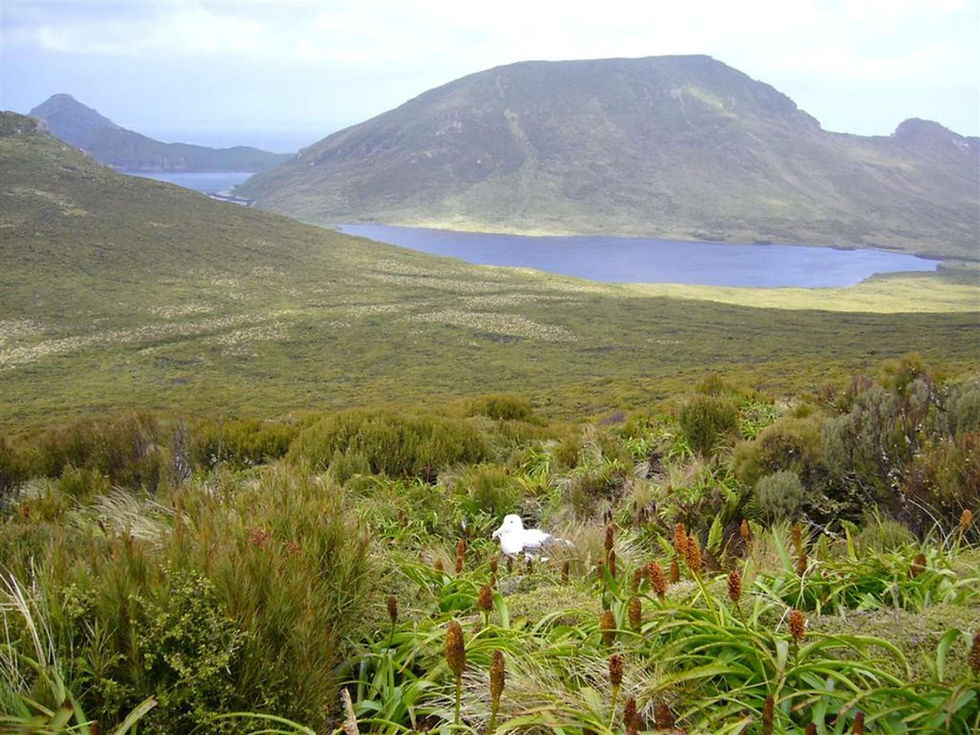
We leave the shelter of the forest behind us and begin to climb, the dark tangle of trunks and fern giving way with every step. The air feels broader up here, lighter, and the ground underfoot changes too—less leaf litter, more wind-worn soil, tussock, and open space. When we reach the rise and look out, the world opens all at once.
This is the open country of Aotearoa: grasslands, shrublands, and herbfields stretching across hills, plains, and basins, shaped by climate, fire, browsing birds, and time. After the shadowed world beneath the canopy, this feels almost exposed—but it was no less alive. Here, in the sweep of gold and green before us, another side of pre-human Aotearoa begins.

13% of the land in Aotearoa is covered in grassland, and mainly consists of tussock grasses. These grasslands are about 800 m above sea level in cooler, drier parts of Aotearoa and are often found in the North Island’s central plateau and the plains of Otago and Canterbury in the South Island, consisting of over 190 species of grasses.
Over the last 2 million years during the Pleistocene, the grasslands grew and shrank as the world got drier and more water got locked up in the mountain glaciers. It's a dynamic habitat, and life has adapted well to the changes.
The first bird we encounter under our feet, their barred white-and-black markings darting into the grass, is the New Zealand Quail / Koreke (Coturnix novaezelandiae), our only native member of the pheasant and quail family. Its closest living relative is the Australian stubble quail (Coturnix pectoralis), and they were common in grasslands, living in large families all over Aotearoa. They had very stout legs and a torpedo-shaped body with which to run through thick grass and undergrowth, and look for seed and small animals through the grasses.

They faced the same threats as so much of our wildlife, like habitat loss, human hunting, and introduced mammal predators, but they also had to compete with pheasants and quails introduced by Europeans, and after 100 years of dealing with all these threats, the New Zealand Quail went extinct in 1875.
As we keep moving, a small, long-tailed songbird flutters past, revealing itself as a New Zealand pipit / Pīhoihoi (Anthus novaeseelandiae). While they are uncommon, they can be found all over New Zealand in open areas from the main islands, subantarctic islands like Auckland and Campbell Island, and the Chatham Islands.
These birds spend their time looking for small insects and seeds in the grasses. They prefer native grasslands and don't like pasture, so even if they initially benefited from land clearing, they declined after it was converted to farmland.
As we keep moving, we wander next to a group of quite large birds, vaguely like moa, but smaller, and with a very wide bill. Upon closer inspection, they turn out to be North / South Island goose (Cnemiornis gracilis / calcitrans). Like other bird species we have talked about before, the South Island species was heavier at 18 kilos to the North Island species’ 15, but both were about 1 meter tall, comparable in size to adzebills and smaller moa species.
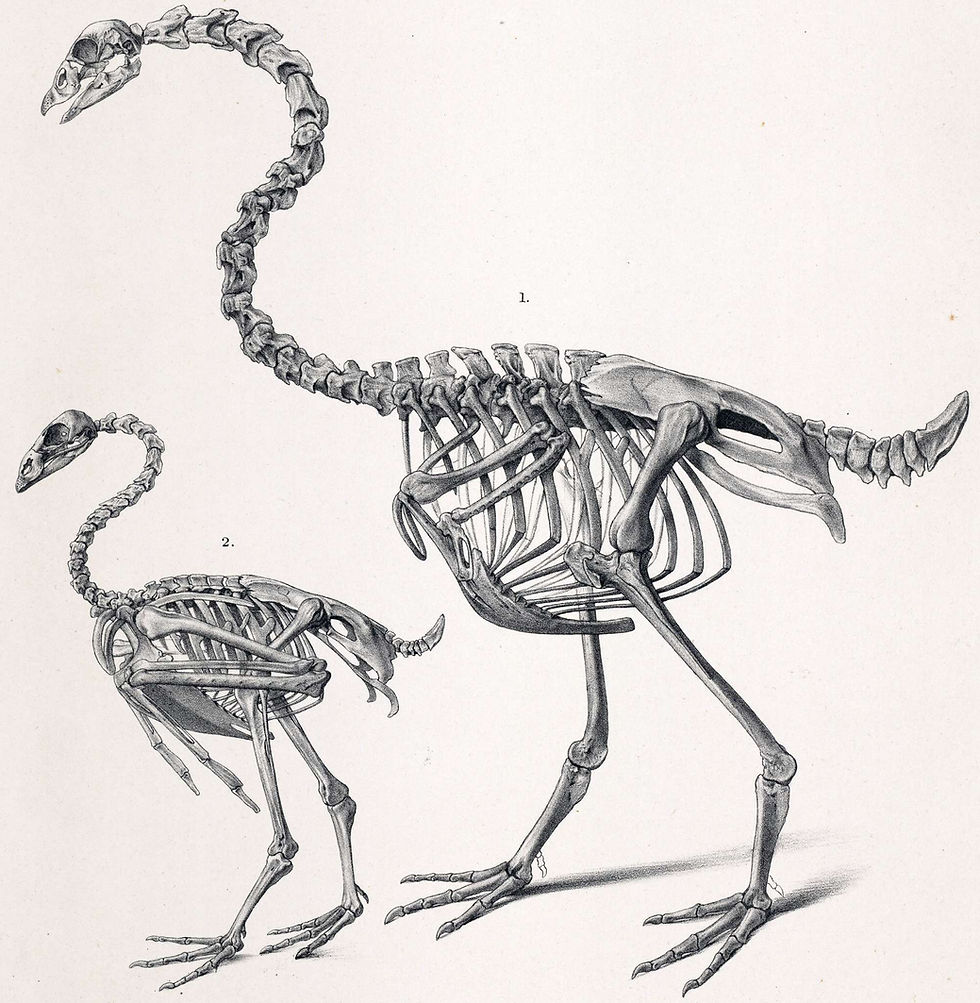
Their closest relative is the Cape Barren goose (Cereopsis novaehollandiae), and all the classic traits like longer legs, shorter wings, and a reduced tail suggest that it was flightless and were grazers spending its time in the grasslands, like a bird version of an antelope feeding on the tussock grasses. Both species were widespread in the grasslands of Aotearoa and most likely went extinct due to human hunting not long after Polynesian arrival.
As we carry on walking in the grasses, we come across a flock of silvery grey ducks in the grasses. These are Finsch's duck / Manutahora (Chenonetta finschi), one of the most common ducks in Aotearoa at this time. This bird is a close relative of the Australian wood duck (C. jubata), and unlike most ducks they are much more terrestrial than other species, living in open areas like grasslands. Its reduced wings and larger size suggest it was more terrestrial and potentially flightless.
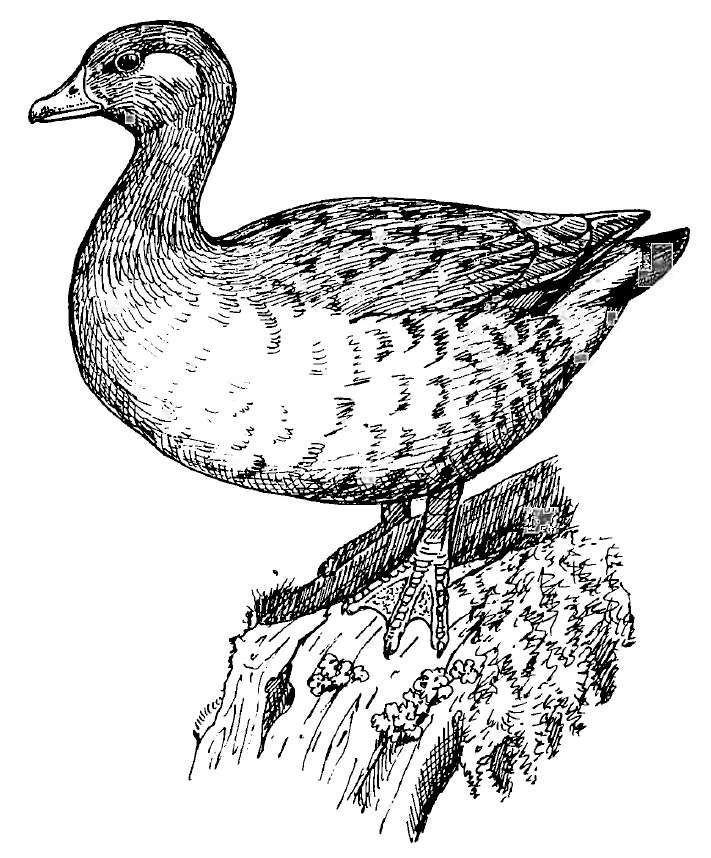
These birds had a great sense of smell, and seem to have been an important prey species for our raptor species like the Haast Eagle and Eyles’ harrier. It is unknown when exactly it went extinct, with potential sightings by Europeans that match these ducks, but they likely were extinct before Europeans made it to Aotearoa, due to habitat loss, human hunting, and kiore eating the eggs of these species.
We find a stand of Speargrass (Aciphylla) and decide to look through it, looking for one of the rarest insects in Aotearoa, the Canterbury knobbled weevil (Hadramphus tuberculatus). We manage to find one and pull it out to admire it. They were a common species until the 1870s but declined due to farmers removing speargrass and rats until they were thought extinct in 1922, then rediscovered in 2004. Even today they are considered rare, with a population of less than a couple hundred, and are considered critically endangered.

As we look up, we see the shape of a large bird only a few meters in front of us. We are behind it, so we can't really tell what it is yet, but judging from its size alone it looks like a moa, and it's not until the bird looks over to us that we can identify it, as its feathery head crest gives it away as the Crested moa / Moa koukou (Pachyornis australis). We then see another smaller moa, potentially a male, as they see each other, raise up their necks and hold their heads high and begin to dance, turning their heads back and forth as they boom deep calls at each other.
This species was a specialized one and was found in shrubland and grassland in the South Island, staying in the interior. They were larger moa, reaching 1.5 meters tall and weighing up to 90 kgs, and could be told apart by their crest, as they were the only species with small pits on the skull, suggesting they had anchored feathers. They were likely used in displays like this pair are doing, signalling strength and fitness.
These moa are rare in middens, but over 100 have been found in caves and other sites, and being a species living in a remote habitat, they were likely one of the last to go extinct, surviving in the 13th–14th century after Māori finally made it to the interior of the South Island into their habitats.
We make our way to a braided river over the horizon, and as we make our way we hear the zonking calls of a pair of Paradise shelduck / Pūtangitangi (Tadorna variegata), our most common waterfowl today. These were one of the few birds that benefited from land clearing, and today have an estimated population of 700,000. They are bigger than a duck but smaller than a goose. They have sexual dimorphism, with males having a black head and the females white, with a brown body. They are grazers, feeding on a variety of plants around lakes and rivers.
As we make our way to the stones, we look to the ground and manage to spot some Robust Grasshoppers (Sigaus robustus). They are a rare species today, found only in the stony grasslands of the Mackenzie Basin. Today they are very rare, with their populations declining down to 600 or so in 2010, prompting the creation of the first fenced mainland island to protect a species of insect.

Braided rivers flow in multiple, mobile channels across a gravel floodplain, creating islands within. These braided rivers are very important breeding and feeding habitats for many species of birds. Birds like the Caspian tern / Taranui (Hydroprogne caspia) and the endemic Black-fronted tern / Tarapirohe (Chlidonias albostriatus) breed here on the rocky gravels of inland riverbeds, safe from predators down at the coast and ocean. The now declining Black-billed gull / Tarāpuka (Chroicocephalus bulleri) also breed here, along with the South Island pied oystercatcher / Tōrea (Haematopus finschi), avoiding the coastal-breeding Variable oystercatcher / Tōrea pango (Haematopus unicolor).
One small wading bird we can see as we look through our binoculars is a Wrybill / Ngutu pare (Anarhynchus frontalis), with this one we are looking at having a crooked beak, bending to the right. We think, oh, this one must be deformed, but as we look at a little group of them, we see all of them have this crooked beak, and all to the right. This makes the Wrybill a very special bird, the only bird in the world with a laterally-curved bill. These birds use this bill to turn over the riverstones to find the invertebrates hiding underneath. Wrybills migrate to these braided rivers every year to breed, then fly up to the North Island’s coast in the summer to feed.

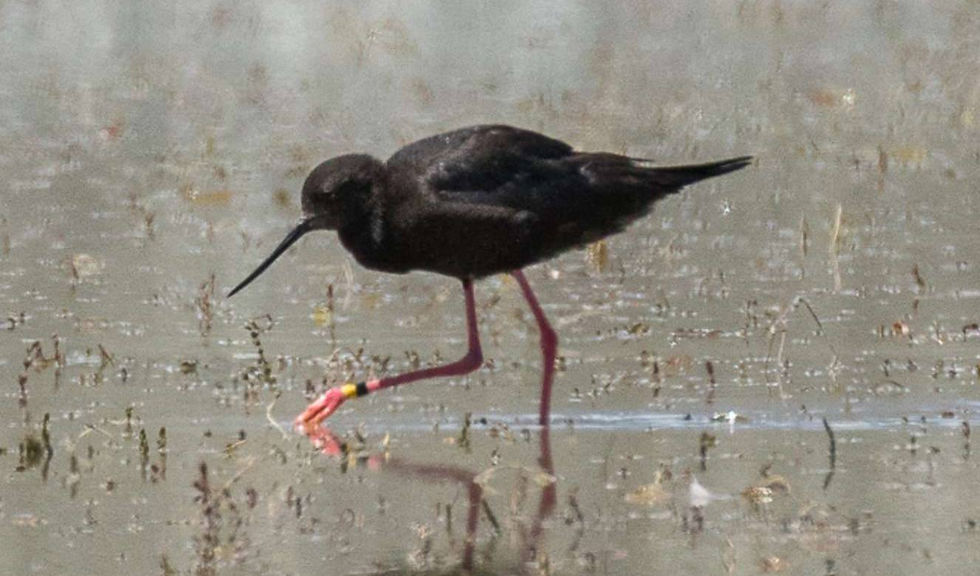
We then look over to see the shapes of black birds on long red legs. These are Kakī / Black stilt (Himantopus novaezelandiae), in this time a common wader, but in our time one of the rarest birds in Aotearoa, with only 170 left alive. They used to range all over Aotearoa, but in the 1980s, after decades of egg loss from introduced predators like mustelids (ferrets and stoats), cats, hedgehogs, and rats, are now only found breeding in the Mackenzie Basin.
Due to this, the Kakī are heavily managed by DOC, with captive breeding programs and trapping in remaining habitats done to try and save this species. A closely related species, the Pied stilt / Poaka (Himantopus leucocephalus), has established in New Zealand as the Black stilt declined, and sometimes hybridizes with them. These Pied stilts have the mammal-defence behaviours that the Black stilts do not, thriving while the endemic species suffers.
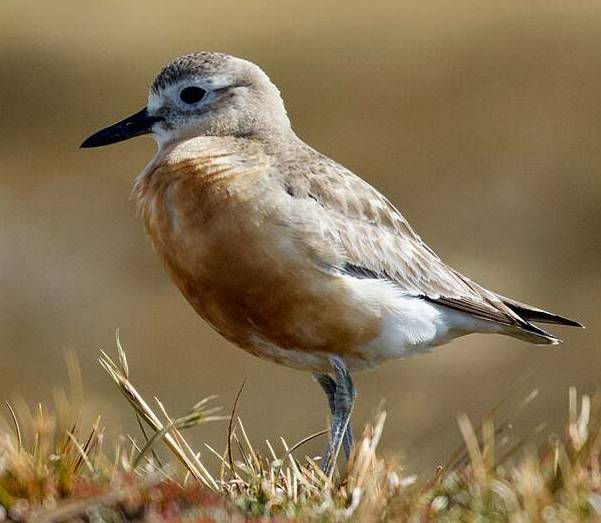
Another bird species struggling is the New Zealand dotterel / Tūturiwhatu (Anarhynchus obscurus). There are two subspecies, the Northern New Zealand dotterel (A. o. aquilonius) and the Southern New Zealand dotterel (A. o. obscurus), living in the North and South Island respectively. The main differences between these subspecies are that the southern population is 15 grams larger and they breed in different areas, with northerns breeding on beaches and the southerns breeding in these braided rivers.
The northern subspecies today is doing okay, and due to predator control and fencing off nest sites on beaches, the population has reached 2,600, but the southern population has not been so lucky. Southern New Zealand dotterels were extirpated from the South Island by about 1900 due to mustelids (stoats, ferrets, and weasels), with a rapid decline of the Stewart Island population from the 1950s due to cats.
Males incubate at night, and are more vulnerable, with female-female pairs becoming more common as males and chicks get eaten. The population was reduced to 18 male-female pairs by 1992, and predator control started. The population recovered, but has since declined again. Its breeding range remains confined to Stewart Island, and in 2025 the population was estimated at 105 birds, dependent on intensive predator control for their survival.
We make our way across the braided river and to the other side, walking up steep terrain as we make our way up into more upland areas, as we spot a large skink basking itself on a rock. The black and gold pattern gives this away as an Otago skink (Oligosoma otagense). This is the largest skink known from the South Island and, unlike forest skinks like the Robust skink (O. alani), lives in grasslands and rocky outcrops. Aotearoa is home to 150 different species of skink and gecko and they live in habitats all over Aotearoa, from coasts to forests, grasslands, and, as we will find, even high up into the alpine areas, much more diverse than a lot of other gecko species worldwide.

As we carry on, we encounter a large rail, looking like a Pūkeko (Porphyrio melanotus) but much too big, and it looks to be one of our more iconic animals, the North / South Island Takahē (Porphyrio mantelli / hochstetteri). Both species have interesting stories, and we will start with the story of the North Island Takahē, or the Moho (Porphyrio mantelli). They were quite similar, but the Moho was taller and leaner than the Takahē, almost looking like a giant Pūkeko.
The Moho was found in the grasslands and scrublands of the North Island and was first described from subfossils in 1848. Both species were at first considered the same back then as Notornis mantelli, the Mantell’s southern bird, by Richard Owen, one of the first paleontologists. Skins then from the South Island were found and secured by Walter Mantell, son of Gideon Mantell, who named the first dinosaur, Iguanadon. The skin was sent back to London in 1850. The South Island takahē acquired further fame, with three more specimens secured before its extinction in 1898. In November 1948, after 100 years since the last sighting, the South Island takahē was rediscovered in the Murchison Mountains by Dr Geoffrey Orbell.
The two species were considered the same until 1996, when the Moho was split into its own species separate from the Takahē, keeping the Mantell name. The Moho is assumed to have gone extinct sometime after Māori settlement, but there have been unconfirmed reports of them potentially living up to the 19th century. In the autumn of 1894, surveyor Morgan Carkeek reported an unfamiliar, large blue bird caught in the northern Ruahine Range. The skin was delivered to Mr Roderick McDonald of Horowhenua, where excited older Māori recognised the bird as “the rarely seen Mohoau”. The now sadly lost specimen is tentatively regarded as the Moho and likely the only one seen by Europeans.
While the story of the Moho ends with extinction, the story of the South Island Takahē, or the Takahē (Porphyrio hochstetteri), is one of our greatest conservation success stories. Great debates on what to do with the last Takahē, with some wanting to leave it to find its own “destiny” or to intervene and help save the species, with others wanting to take the species onto offshore islands and breed them in captivity.
The first big step was in 1985, with the creation of the Burwood Takahē Breeding Centre near Te Anau, hand-rearing eggs with hand puppets to avoid imprinting and moving breeding pairs to predator-free offshore islands like Kapiti Island and Tiritiri Matangi Island, and later fenced sanctuaries like Zealandia and Sanctuary Mountain Maungatautari. This has worked out well for the Takahē, with the population now estimated to be 500, making a strong comeback.

The terrain gets much more hilly now, and as we see a small green bird darting through the tussock, it looks like a wren of some kind, but not like any we have seen before, with its large size and long beak giving it away as the Long-billed wren / Manu paea (Dendroscansor decurvirostris), the rarest fossil wren of Aotearoa. The irony of the species name comes from the Greek dendros (a tree) and Latin scando, scansus (to climb), referring to its supposed arboreal, trunk-foraging habit, but this wren is only found in the upland scrubland and tussock of the Southern Alps, and known from 4 cave sites in Southland and Nelson. It was a large wren, second only to the Stout-legged wren at 30 grams, and had this long bill to find small insects in the grasses. Like the other flightless wren species, it went extinct after human arrival and the arrival of the kiore.
This climb has been tiring, so we decide to camp, setting up a tent next to some rocks, and to get water we walk down to the stream, with fast-flowing glacier melt. As our boots kick against the stones and we crouch to fill our water bottle, we see on the other bank a pair of Whio / Blue duck (Hymenolaimus malacorhynchos), a very special duck. These ducks like to live in fast-flowing waters in rivers in both main islands and are only one of 4 species of “torrent duck” found worldwide. They also have black flaps along the tip of their beak, an adaptation for turning over stones to find freshwater invertebrates to eat. Along with their territorial nature, that means these ducks were never common, and they are specialized to these fast-flowing habitats, not breeding too fast to overpopulate their habitats.
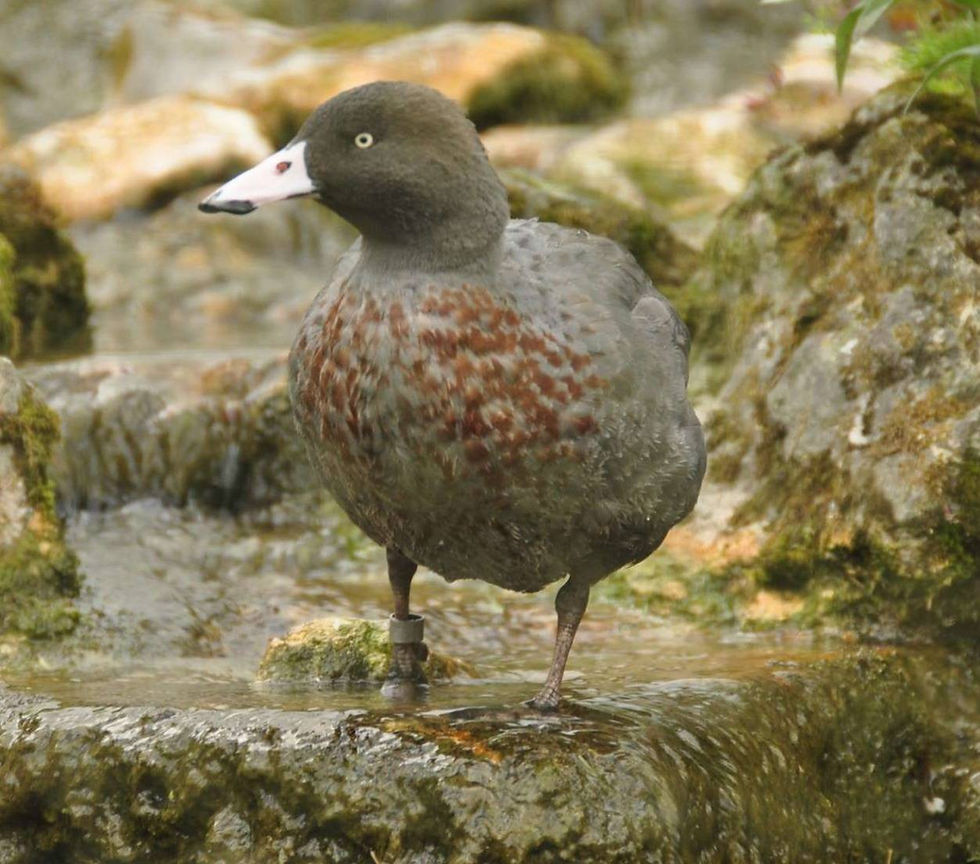
With the introduction of mammals like stoats, possums, and rats, the nesting females and their eggs are easy targets, and like Kea and Kokako, the population becomes male-heavy and struggles to grow. One way to solve this would be to put them on safe offshore islands, but because practically none of these islands have the fast-flowing river habitat they need, this wouldn't work with the Whio, so they rely on trapping and baiting to keep them safe from extinction. Luckily small-scale trapping has helped keep numbers stable, but really the only way to help this species is to remove them from the upland areas on a large scale, this trapping being very difficult and labor-intensive and very difficult to scale.
We then head back to camp, cook dinner, and get into our sleeping bag ready for bed. After a few hours we wake up to the whistling and growls late at night. This wakes us up as we open our tent to find a pair of Great Spotted Kiwi / Roroa (Apteryx maxima) probing in the ground looking for food. While we think of kiwi as forest birds, these large Great Spotted Kiwi can be found here in the subalpine areas. Today they can often only be found here, with introduced predators being less common at these elevations, with the Great Spotted Kiwi being found in the upland areas of the north-west South Island. Other species live up here too, with the Haast Tokoeka (Apteryx australis 'Haast'), the rarest population of kiwi at only 400, living up in the mountains along the West Coast and being intensely managed with captive rearing and trapping in their range.
The kiwi continues to probe and rummage through the undergrowth, as we follow suit, finding the remains of Alpine Cicadas (Maoricicada sp) after a trying summer, with nine species being found in these subalpine areas. Aotearoa is unique in being the only place in the world with these Alpine Cicadas, and they are found all across the Southern Alps.
As we keep climbing, we keep looking on the ground to see what we can find, turning over stones. We keep doing this until we find even up this high a Mt Arthur Giant Wētā (Deinacrida tibiospina). Two of the most endangered species of Giant Wētā, such as this one and the Giant Mole Wētā (Deinacrida talpa), live up here, migrating up and down the mountain during the year. Like other giant wētā species, they have declined due to the introduction of rodents, competing for food and eating the young nymphs. Unlike other wētā species like Wētāpunga (Deinacrida heteracantha), they have not really received the same conservation work, due to their remoteness. There has been growing concern about these wētā and how their wild populations are doing.

As we keep on along the rocky slopes, we then see the only completely alpine bird in Aotearoa, the Rock wren / Pīwauwau (Xenicus gilviventris). This is one of only 2 wren species that survive today of all the 6–7 wrens we have talked about in this blog series, with the only other being the tiny tree-dwelling Rifleman / Tītitipounamu (Acanthisitta chloris), likely because of their alpine habitat up in the herbfields and scree slopes in the Southern Alps, and the ability to fly short distances. We follow this rock wren as he finds feathers to line the nest, finding feathers from Weka, Kākāpō, and a third type of large feather, with an odd mottled pattern, unable to identify at this time.
Sadly, even up here, the Rock Wrens are not completely safe from introduced predators, and once Europeans introduced stoats and mice, we see major declines in these alpine wrens as they eat the eggs and the young chicks. While trapping and baiting helps, the remote, harsh habitat makes that difficult, and with climate change, populations of these predators increase up here, which could push the Rock Wren closer to extinction, being declared Nationally Endangered in 2013.

Looking on the rocks around the nest, we even find reptiles up here as we find and manage to catch a Black-eyed Gecko (Mokopirirakau kahutarae), the highest-living gecko in the world, found at 2,200 meters or over 7,000 feet above sea level. These guys really are testing the limits, capable of living in the harsh alpine zone where most other lizards would perish, coming out at night and basking on rocks during the day. Due to their slower metabolism, these geckos could live into their 80s and maybe in excess of 100 years, very impressive for a small gecko living in the mountains of Aotearoa.
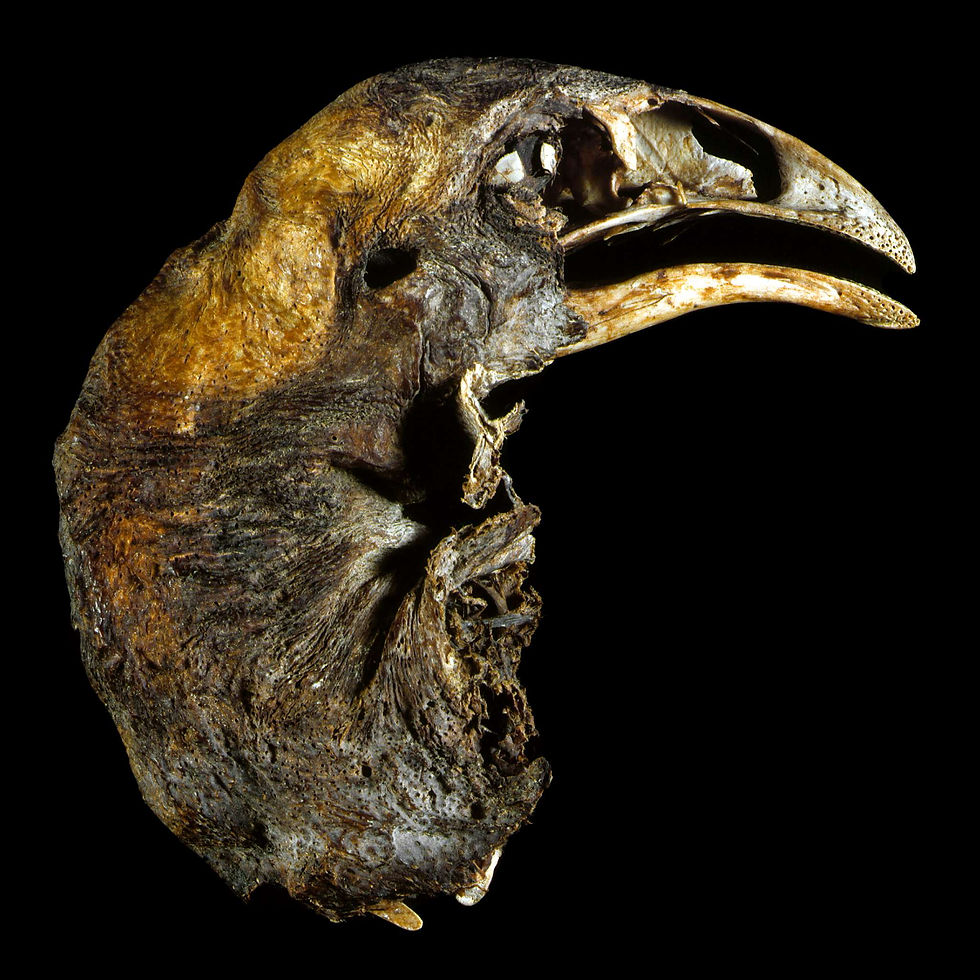
We then carry on along the slopes and herbfields, as we find a sheltered rocky outcrop protected from the wind and rain. As we walk past it we almost miss something big, looking over the animal showing a mottled pattern very similar to the feathers we found in the Rock Wren nest, which turns out to be that of an Upland moa / Moa pukepuke (Megalapteryx didinus), a male sitting on a nest of 2 blue-green coloured eggs, keeping them warm and protecting them from the elements.

The Upland moa is one of the best-known moa, with not only bones found but mummified specimens and feathers found as well, preserved in their cold alpine habitats. As the name suggests, this species of moa was like the mountain goat or ibex of the moa, especially adapted to the alpine and subalpine habitats of the South Island. They were also a smaller, slender moa species, reaching 95 cm tall and weighing no more than 80 kgs, with their small size and slender toes allowing them to walk through snow. They fed on the tussock, herbs, shrubs, and leaves of many species of alpine plant. This male may be sitting here in his rock shelter for months tending to the eggs.
In this time, the only threat the Upland Moa faced was the Haast Eagle and would have used its camouflage to stay hidden from this apex predator, but this did not keep them safe from the next one, the Māori. These upland moa are commonly found in Māori middens, along with specialized tools to butcher them. They likely lasted the longest due to their remote habitat, but like all 9 species of moa, went extinct around the 14th century due to human hunting.
These tussock lands and alpine habitats are very sensitive to change, and through the last few hundred years they have been subject to a lot of change. As a lot of the forests and grasslands are adapted to deal with bird predators like Moa and Takahē, the cloven hoof and toothy maws of introduced ungulates such as deer and Tahr have a massive impact on these plant communities, stripping undergrowth bare and damaging soft plants under their hooves, creating bare mountain faces and forests devoid of undergrowth.
Another issue is recent climate change, meaning that introduced predators are able to make it higher and higher up the mountain slope, with hedgehogs and mice now being recorded at over 2,000 meters above sea level, preying upon these slow-breeding mountain species.
As we make our way back down from the open country, it’s hard not to notice how fragile this world really is.
These grasslands, rivers, and alpine slopes may seem vast and resilient, but they have always been shaped by balance—by climate, by fire, and by the birds that once grazed and moved across them. Without those natural pressures, and with the arrival of new ones, that balance has shifted.
What we’ve seen out here isn’t just a different landscape from the forests—it’s a reminder that Aotearoa was never just one habitat. It was a mosaic, each part connected to the next. The loss of one system echoes into another. The disappearance of moa changes the plants. The decline of riverside birds alters entire ecosystems. The arrival of mammals reshapes everything.
And yet, just like in the forests, this story isn’t only about loss.
Across these open spaces, life still persists. Some species cling on in small, managed populations. Others are beginning to recover through conservation, fencing, and predator control. Even here, in places that feel exposed and unforgiving, there is still resilience.
But it is a quieter world now. Fewer footsteps in the grass. Fewer calls carried on the wind.
The open country of Aotearoa still stretches out before us—but it is only a fragment of what once was.
What happens next is up to us.
References
“Home Page | New Zealand Birds Online.” Www.nzbirdsonline.org.nz, www.nzbirdsonline.org.nz/.
“Grasslands • Environment Guide.” Www.environmentguide.org.nz, www.environmentguide.org.nz/issues/biodiversity/new-zealands-biodiversity/grasslands/.
“Grasslands.” Govt.nz, 2017, teara.govt.nz/en/grasslands/print.
“Canterbury Knobbled Weevil – New Zealand Bug of the Year.” Ento.org.nz, 2026, bugoftheyear.ento.org.nz/2026-bug-of-the-year-nominees/canterbury-knobbled-weevil/ . Accessed 18 Apr. 2026.
“Robust Grasshopper - BRaided Rivers New Zealand.” BRaided Rivers New Zealand, 23 Mar. 2026, braidedrivers.org/ecology/robust-grasshopper/ . Accessed 18 Apr. 2026.
Braided River Ecology a Literature Review of Physical Habitats and Aquatic Invertebrate Communities. https://www.doc.govt.nz/documents/science-and-technical/sfc279entire.pdf
“Native Herpetofauna Index | NZHS.” Reptiles.org.nz, 2021, www.reptiles.org.nz/herpetofauna/native-index . Accessed 18 Apr. 2026.
New. “Alpine Plants and Animals.” Govt.nz, 2025, teara.govt.nz/en/mountains/page-4, https://teara.govt.nz/en/mountains/page-4.
“Our Threatened Species.” Wētā Conservation Charitable Trust, 11 Aug. 2025, wetaconservation.org.nz/our-threatened-species/ . Accessed 18 Apr. 2026.