


Aotearoa Before Us VI: Subantarctic Islands

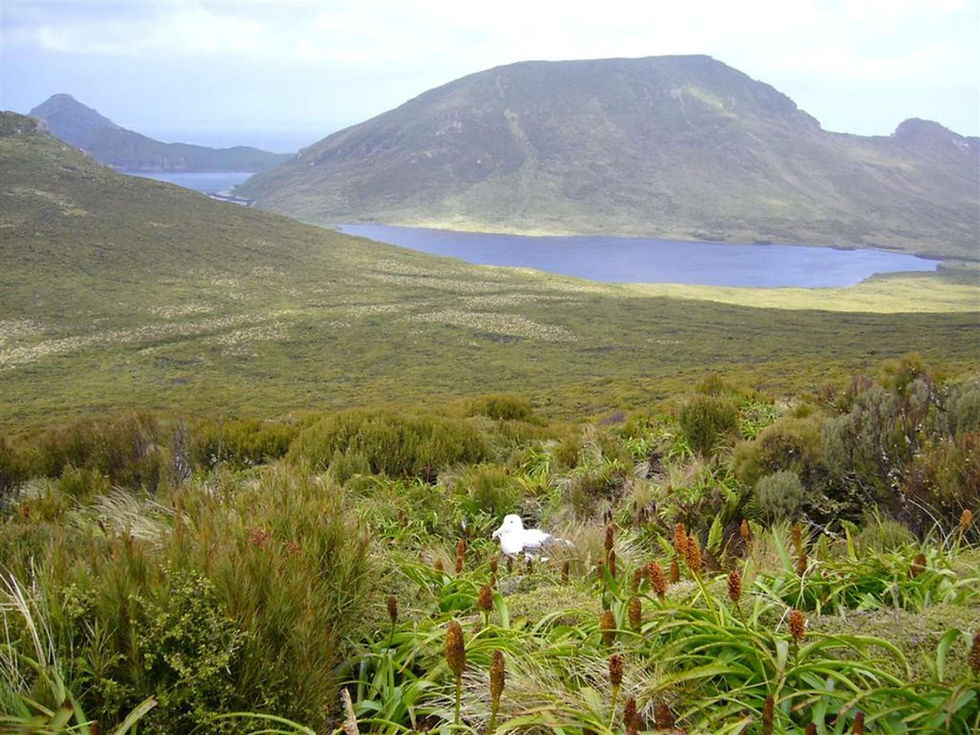
We leave the mainland far behind us, the last outline of Aotearoa long swallowed by sea and sky. Days into the voyage, the world feels almost entirely ocean—until at last, dark land rises ahead of us through the mist. The Antipodes Islands.
As our sailboat cuts closer through the cold southern water, the silence begins to break. First come the seabirds, their calls wheeling over the wind, circling above the cliffs and the swells. Then, from the shore, deeper sounds carry out across the water—the barking roars of seals and sea lions hauled out along the rocks below. This place feels distant, raw, and crowded with life all at once.
These islands are among the most isolated parts of Aotearoa’s world, battered by storms, wrapped in salt and spray, and home to species found nowhere else on Earth. If the forests and grasslands of the mainland were one story, then the subantarctic islands are another entirely—stranger, harsher, and every bit as remarkable.

The Antipodes Islands /Moutere Mahue are a small group of islands, in total about 2,000 hectares, about 860 km South of mainland Aoteoroa, deep in the Southern Ocean. They are also quite young, at only a few million years old, it started out as an active volcano, and after going extinct, became a safe haven for life in the vast, windy open ocean.
As our boat lands onto the shore, we see even down here near the bottom of the world, we see a wide variety of life. We first see colonies of New Zealand fur seal/ Kekeno (Arctocephalus forsteri) and New Zealand sea lion/ Pakake (Phocarctos hookeri) which in this time was common but in the modern day, the world's most endangered sea lion. We also see the large rookeries of the Southern elephant seal (Mirounga leonina). They used to be found all over Aotearoa's coasts, but today, the largest population in our region is here in the Antipodes. After being hunted for centuries by Maori and European sealers they are only recently returning to these numbers, and even today face threats like climate change and commercial bycatch.
These Antipodes islands are also a hub of bird life, with 24 species known to breed here. Species like the Cape petrel/ Karetai hurukoko (Daption capense), Soft-plumaged petrel
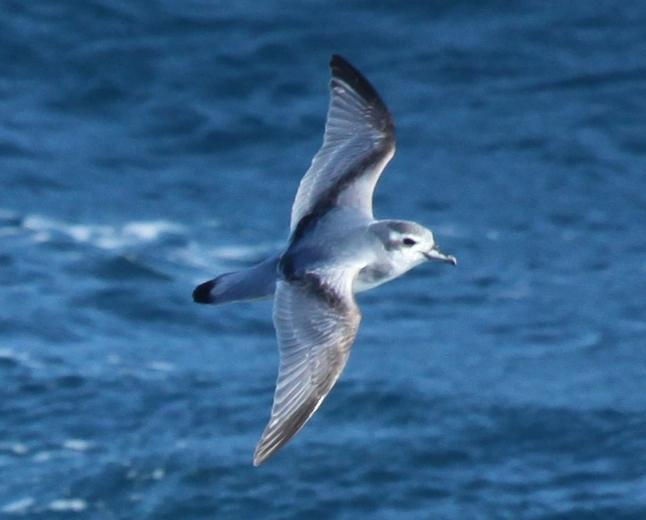
(Pterodroma mollis),Fairy prion/ Tītī wainui (Pachyptila turtur) and Subantarctic little shearwater (Puffinus elegans) breed here in large numbers. They are also home to the Antipodean albatross (Diomedea antipodensis antipodensis) and like other Albatross species need these large treeless areas to build their nests, safe from predators. The rest of their lives they spend out at sea, only returning to land to breed at 7 years old, and biannually after that, meaning these large birds breed slowly, and are quite vulnerable to predators.
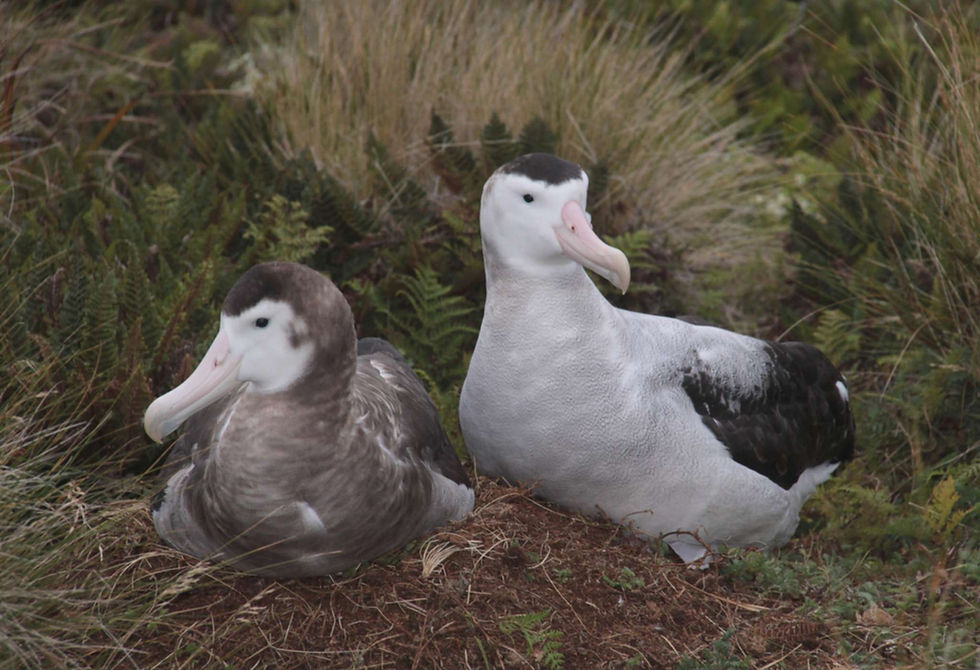
As we look up the rocks we see a massive breeding colony of Erect-crested penguins/ Tawaki nana hī (Eudyptes sclateri), distinguished from other crested penguins by their larger size and tall eyebrow stripes that run along the head. The Antipodes is the main breeding site for this species today, with 42,000 pairs here today , but it's likely in this time, they were much more numerous.
We make our way up the rocky, guano covered beaches and look over the harsh, wind swept tussock grasslands and scrubland, unable to grow tall trees, but we do come across interesting plants ,the Antipodes Carrot (Anisotome antipoda) and Macquarie Island Cabbage (Azorella polaris) these are species of what are called “megaherbs”. In the absence of trees, these herbs go large, with Antipodes Carrots getting over a meter tall with large leaves and stalks with clusters of pink flowers on the top. There are about 9 species of these megaherbs found across the Subantarctic islands, and we will encounter more as we move to other islands

As we push though the tussock we manage to find ourselves a Antipodes Island Snipe (C. a. meinertzhagenae). Each island we will be visiting has its own endemic subspecies of Subantarctic Snipe (Coenocorypha aucklandica). The ones found in the Antipodes are darker and more yellowish compared to other islands and have grey legs, they are not much different than the now extinct mainland spine we have talked about, finding food by probing into soil for invertebrates. In this time they are very common among the tussocks
We also see flying past along the tussock is an Antipodes pipit/ Pīhoihoi (A. n. steindachneri) a subspecies of the New Zealand pipit/ Pīhoihoi (Anthus novaeseelandiae). As an open habitat species, the subantarctic islands are perfect habitat, and have been spared the land changes mainland populations have, meaning they are still quite common down here today, feeding on the grains and insects.
As we come back down, we run into a red crowned parakeet, but it's unlike the ones we find on the mainland, closer inspection finds it to be a Reischek's Kakariki (Cyanoramphus hochstetteri). While it was once considered to be a subspecies of the Red-Crowned Kakariki (C. novaezelandiae), genetic studies show that its closest mainland relative is actually the Orange-fronted Kakariki / Kākāriki karaka (C. malherbi) the smallest and rarest of all. These are common among the open areas and penguin colonies, feeding on flowers, seeds, insects and the like among the enriched ground.
As we make our way back to the coast, moving past the seabird burrows and low lying plants, we come across the carcass of an Albatross, with what appear to be large green kakariki scavenging on it. These are Antipodes Island Kakariki (C. unicolor) and like the Reischek's they feed on seeds and bugs, but also like scavenge on the carcasses of dead marine life and have even been recorded killing Grey-backed storm petrel/Reoreo (Garrodia nereis) a common breeding bird to all these subantarctic islands. They are the largest of all the species of Kakariki, at 32cm long and 130 grams and a plain green plumage. They are less abundant than the Reischek's Kakariki but are still common across the island, making this a unique ecosystem where the top predator is a Kakariki.


While the most isolated of our subantarctic islands, even mice managed to make their way down here to this small island. These mice likely snuck aboard a sealing ship and managed to colonise the island when they came ashore, but even they had a massive impact on local birds, competing with native birds for food and eating their eggs, causing major declines even in species like snipe, where populations were reduced to a third of what they were on mouse free islands.
That was until 2012, when fundraising for the “Million dollar Mouse” project started. In the winter of 2016, DoC (Department of Conservation) carried out bait drops, with 65 tonnes of bait dropped from three helicopters, eliminating the 200,000 mice on Antipodes Island. They then searched with trained dogs for any remaining rodents and no signs turned up, making the Antipodes Islands free of introduced mammals once again,and the native plants and wildlife are recovering, beginning to become as numerous as they are now, 1,000 years in the past.
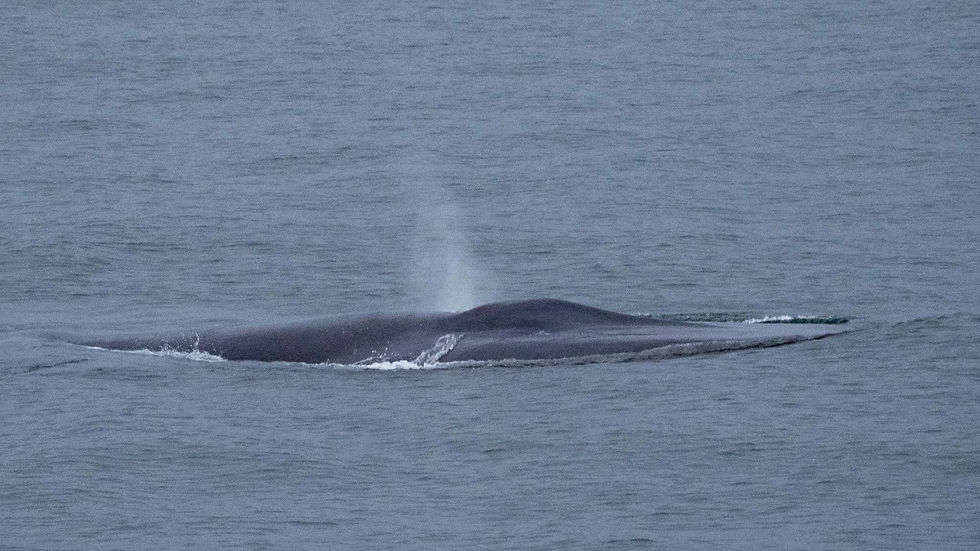
As we take a night's rest on dry land, we pack up for the morning to make our way to the next destination, seeing a rich diversity of cetaceans as we go. We see over the journey pods of Humpback Whales/ Paikea (Megaptera novaeangliae) as they migrate to the tropics to give birth, a large 21 meter bull Sperm Whale/ Parāoa (Physeter macrocephalus) taking a breath before diving back to the depths of the Southern Ocean, his face scarred from the marks of large squids and the teeth of other males. A definite highlight though was a large 30 meter female Blue Whale/ Tohorā nui (Balaenoptera musculus), the largest animal on earth, taking a breath and the surface before she disappears into the depths of the Southern Ocean.
These whales, along with species like the Fin Whale/ Raratahurihuri (B. physalus) and Sei Whale (B. borealis) were all heavily impacted by whaling in the 18th and 19th century with the hunting of these species only really stopping in 1964, ending 170 years of whaling on Aotearoa. Some species have recovered after the ban like Humpbacks, reaching 93% of their original population, but others are recovering much slower, with the species like the Blue whale still considered critically endangered, with their global population still only at 1% of their original numbers.
After 3 days of sailing, we finally see dry land once again, seeing the shore of the Campbell Islands/ Motu Ihupuku. These islands are much larger than the Antipodes, with an area of 11,000 hectares, a bit older than the Antipodes at 6 million years old, they have had longer to start developing endemic species. A base for sealers and whalers, there were small attempts to farm here with sheep and cattle being introduced, but abandoned in the 1930s. Along with brown rats and feral cats, these introduced species had a massive impact on the island.
As we come to shore we see large colonies of seals and sea lions upon the shore, even spotting a sole Leopard Seal/ Pākaka (Hydrurga leptonyx) sleeping along on the beach. We do also see penguins, but they look smaller, and have much longer and droopy feather brows than the erect-crested penguins, looking like Eastern rockhopper penguins / Tawaki piki toka (Eudyptes filholi). Their main breeding island is the Campbell Islands, but they do breed on the Antipodes as well, often more inland above colonies of erect-crested penguins. Their colonies are in the hundreds of thousands, but as recently as 2012 they have declined from 800,000 pairs to only 33,000

The Campbell islands also have large populations of seabirds, with 22 species recorded breeding here. We see large colonies of Grey petrel/Kuia (Procellaria cinerea), White-chinned petrel/Karetai kauae mā (P. aequinoctialis), Sooty shearwater/ Tītī (Ardenna grisea) and the Common Diving Petrel/ Kuaka (Pelecanoides urinatrix) once near eradicated on the islands due to rats, their burrows can be seen all over the tussock.
As we look upon the slopes we see why the Campbell islands are called the "Albatross Capital of the World” with 6 species recorded breeding here, with the most common species being the Grey-headed mollymawk/ Toroa (Thalassarche chrysostoma), Campbell black-browed mollymawk/ Toroa (T. impavida) and the largest, the Southern royal albatross /Toroa (Diomedea epomophora). The Campbell black-browed mollymawk is endemic, only breeding here while 99% of the Southern royal albatross breed here too, with only small populations on the Auckland islands. The royals are some of the largest seabirds, with 3 meter wingspans and weigh up to 10 kgs soar our oceans looking for food, returning to small islands like these to breed safely.

As we walk along the beach among the penguins and pinipeds, we see a Northern giant petrel/ Pāngurunguru (Macronectes halli) savaging on the carcass of a dead Elephant seal. These are the top predators of the island, and while eating fish and squid, they will scavenge carcasses and even prey on other seabirds. It's also fending off other giant petrels and Subantarctic skua/ Hākoakoa (Stercorarius antarcticus). These Skua are much smaller scavengers ,and even have a habit of forcing larger seabirds to disgorge in high flight pursuits, stealing a hard earned meal.

Looking though the rocks and grasses, we see the nest of Red-billed Gull/ Tarāpunga
(Chroicocephalus novaehollandiae). They nest differently here than on mainland Aoteoaroa, on Campbell they nest in solitary and scattered nests, while on Aoteoaroa, they nest in dense colonies. While today they are still the most common gull on the coasts of Aoteoaroa, introduced predators like cats, ferrets, rats and stoats prey upon breeding birds, and along with climate change changing krill availability, have caused declines in modern Red-billed Gull populations

We take out our binoculars to see one of the endemic species found here, with a large breeding colony of Campbell Island shag (Leucocarbo campbelli) along the cliff face. These shags only forage within 10km of the island, flying out in big flocks after small fish and marine invertebrates. Due to them nesting out of reach from rats and feral cats, their populations did manage to stay stable despite the invaders.
Walking along the beach and up into the tussock, we find the nest of Banded dotterel/ Pohowera (Anarhynchus bicinctus), the most common plover species in Aoteoaroa. These dotterels from the subantarctic islands (A.b exilis) are larger than the mainland ones (A.b. bicinctus). While today they are considered vagrants to the Campbell islands, they have managed to begin reestablishing there after rat eradication, returning to lost habitat.
One species that has turned out to be a bit of a mystery is one we can hear chirping in the distance, as we walk over to discover a flock of Campbell Island Kakariki (Cyanoramphus sp). The presence of kakariki on this island is only known from a single bone, so whether it was a population of Red-crowned Kakariki or Reischek's Kakariki or its own species entirely is not known, but it shows what was lost from these islands, but due to their proximity to the Auckland and Antipodes, its very possible they could find they way back to Campbell now it is predator free.
We find ourselves in a field of megaherbs, and we can see the diversity go up,with 6 species known from these islands, finding some like the Campbell Island Carrot (Anisotome latifolia) and Giant Button Daisy (Pleurophyllum criniferum) commonly found on Campbell. The most common flowers we see though are the tall yellow flowers of the Ross Lily (Bulbinella rossii) safe from the cattle and sheep to come.

Under these megaherbs, we find the local snipe the Campbell Island Snipe (C. a. perseverance). These ones are the smallest subspecies, which has the darkest back feathers, pale yellow legs and a pinkish-buff cast to the belly feathers. These snipes went undetected until people went looking on a small inlet called Jacquemart Island, a last refuge from the introduced animals from the mainland. They were also not named until 2010, named after the Perseverance, a sealing ship that discovered these islands in 1810 and likely introduced rats to the island, causing this species to become extinct on the main island. In the years after eradication, concerns that the species would need help to recolonize the main islands grew, and in 2006, a population of these snipe were discovered, showing how quickly nature can recover when given the chance

A small stream appears leading to the ocean as it parts the tussock, and we see one of the rarest and mysterious birds on the island, the Campbell Island Teal (Anas nesiotis). A close relative of the mainland Brown teal/ Pāteke (A. chlorotis), this species is smaller and flightless, only found here among the coast and lakes of the islands. This teal was a mystery for 87 years after the first specimen was collected, was it even real or was it something mislabeled? That was answered in 1973 when a small population was found on the 23 hectare predator free Dent island, a small relit population holding on after being wiped out on the main Campbell island.
To save the species, it was decided to take 11 of these teal off the island and bring them to the mainland to start a captive breeding program and taken to places like Pūkaha National Wildlife Centre (Mt Bruce), Auckland Zoo and even the Otorohanga Kiwi House to care for and breed this species. This started very slowly, and only one female named Daisy bred successfully, meaning they have low genetic diversity, among the lowest of any bird species. It did work though, and enough was bred to release on Codfish Island / Whenua Hou, a safe predator free island that houses Kākāpō. After the eradication of rats on the island, 150 Whenua Hou and captive bred were released onto the main Campbell Island, and since then the species has started to recover, with them going from critically endangered to increasing, one of the greatest success stories of how zoos can help endangered species.

We then pack ourselves for a much shorter trip this time, and head to our final spot. As we carry on, we see the shape of a New Zealand fur seal in the water, until a large female Great white shark/ Mako Taniwha (Carcharodon carcharias) comes up bursting out of the water, before slamming back down into the water. In our waters these sharks are considered endangered, facing threats like getting tangled in fishing gear and climate change, but in this time, they were common in our waters, feasting on the much larger pinniped populations.
As we sail north from Campbell toward the Auckland Islands, the ocean comes alive around us with the shapes of cetaceans cutting through the cold Southern waters. A small pod of Hourglass dolphins/ Kākahi moana (Lagenorhynchus cruciger) darts alongside the boat, their striking black-and-white patterns flashing against the grey sea. These dolphins are true specialists of the Southern Ocean, rarely seen outside these cold, subantarctic waters, where they remain relatively uncommon but well-adapted to life in rough seas.

Not far beyond them, we catch sight of a more elusive species—the Spectacled porpoise/ Kākahi (Phocoena dioptrica),surfacing briefly before disappearing again. This is one of the least observed cetaceans in the world, found in deep, cold waters of the Southern Hemisphere, and rarely encountered even by those travelling these remote oceans.
Further out, a sleek, almost surreal form glides just beneath the surface—a Southern Right Whale Dolphin/ Aihe (Lissodelphis peronii). Lacking a dorsal fin entirely, they move with a smooth, ribbon-like motion through the water. These dolphins prefer the deep offshore waters of the Southern Ocean and are considered uncommon, but when seen, they often travel in fast-moving groups.

Then, in the distance, a plume of mist rises—a breath from an Antarctic Minke Whale/ Tohorā iti (Balaenoptera bonaerensis). Smaller than many of the great whales but still impressive, these whales are among the most common baleen whales in Antarctic and subantarctic waters, feeding on krill in these nutrient-rich seas. Though more numerous than many of their relatives, they remain a reminder of both the productivity and fragility of this southern marine ecosystem.
We finally managed to reach our final destination, the Auckland Islands/ Maungahuka. These are the largest islands we will visit, with the entire archipelago being 56,000 hectares and home to 500 different species of plant and animal. We will today land on the largest island in the chain itself, Auckland Island/ Mauka Huka, and at 46,000 hectares holds the title of being the largest uninhabited island and the 5th largest within the realm of Aotearoa. It also holds the title of being the only subantarctic island in our region with introduced mammals, with populations of mice, cats and pigs still remaining. Goats, cows and rabbits were also introduced to the island group, but have been eradicated.

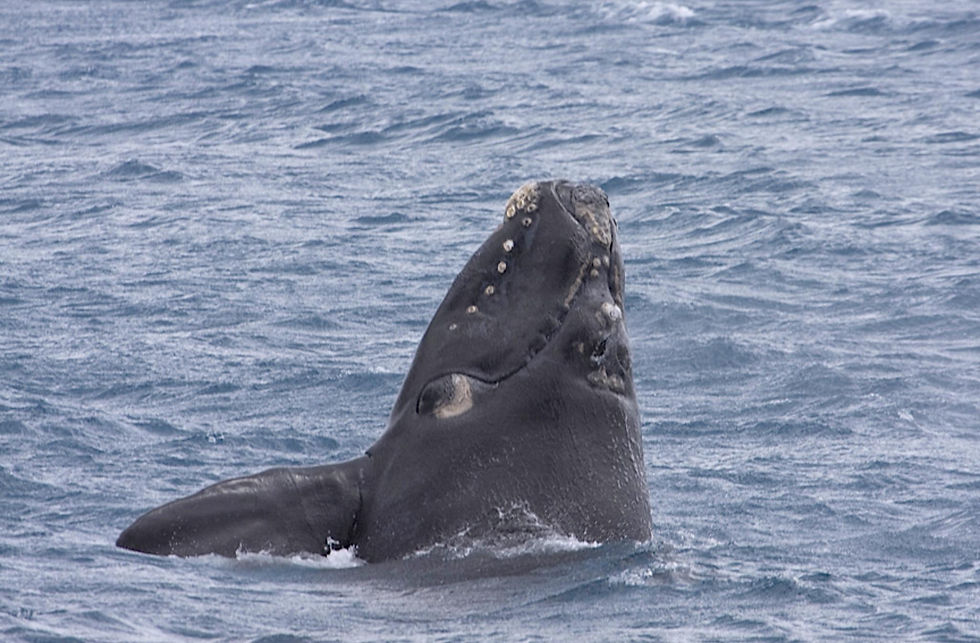
As we pull into the bay, we have to weave though the dark shapes of Southern Right Whale /Tohorā (Eubalaena australis), congregating in the bays for mating and calving. They got their name the “right whale” because they were the easiest for whalers to hunt, and were one of the species most impacted by whaling, going from 40,000 in our waters to only hundreds of animals and only now just recovering. With one of their strongholds being down here in the Auckland islands the population has rebounded to 5,000.
As we carry on we see the familiar sight of thousands of seabirds flying around and nesting on these islands, with a lot of the species now being restricted to islands like Adams Island, Enderby Island and Disappointment Island which either remain free of introduced mammals or have been part of past eradication programs. These islands are home to 26 different species of seabird, a lot of them we have seen before, but we do see other species as we approach the shore. Large colonies of filter feeding prions like the Lesser Fulmar prion (Pachyptila crassirostris flemingi) and the Antarctic prion/ Totorore (P. desolata) fill the skies and small species very sensitive to introduced mammals like the Black-bellied storm petrel/ Takahikare-rangi (Fregetta tropica) can breed here safely along with the Antarctic tern (Sterna vittata).

Just like the previous islands there are Albatross that take advantage of the safe, open breeding habitat. The Auckland Islands is the only place where the Gibson's albatross (Diomedea antipodensis gibsoni), a larger, paler subspecies of the Antipodean albatross breed. The White-capped mollymawk/Toroa (Thalassarche cauta) breeding her in large numbers with 95% of their population breeding here along with the Light-mantled sooty albatross/ Toroa pango (Phoebetria palpebrata) with 30% of their population breeding in Aoteoaroa, and about 5,000 pairs breeding here on Maungahuka.
One species that has gone locally extinct in these areas, and is very close to extinction in general is the recently described Whenua Hou diving petrel/ Kuaka Whenua Hou (Pelecanoides whenuahouensis). Sometimes considered a subspecies of the
South Georgian diving petrel (P. georgicus) these guys used to be found in the Auckland Islands, Stewart Island and the Chatham islands based on subfossil bones, but today can only be found on Whenua Hou/ Codfish Island, with estimated less than 150 left, making them one of the most endangered birds in Aotearoa. They prefer to nest in sand dunes, unlike the rocky slopes or flat land the South Georgian diving petrel prefer, meaning these nesting sites are more vulnerable to storms, forest takeover, sea level rise and invasion by introduced mammals like rats. Even in 2003 a storm led to a dune collapse that killed many birds, with another bad storm potentially meaning the extinction of this species.
As we see the familiar shapes of seals and sea lions we also see colonies of Eastern rockhopper penguins alongside what is today the most endangered penguin in the world, the Yellow-eyed penguin/ Hoiho (Megadyptes antipodes). These are home to the only living subspecies, (M. a. antipodes) and Auckland Islands is considered a stronghold for these species, with about 3,000 pairs living among the islands today. Hohio have begun to try recolonising the mainland, returning to the range of the extinct Waitaha penguin (M. a. waitaha) but they are struggling in the mainland, with chicks getting preyed upon by introduced predators, disease, heat stroke, habitat loss, by-catch and human disturbance causing these mainland populations to decline and the subantarctic populations face a lot of these same issues,

As we pull up to shore, we finally see stands of trees and we find forests of Southern Rātā (Metrosideros umbellata) that can grow near the coasts. As we head in we almost feel like we are back in the mainland, with the Auckland Islands supporting many species we would find there, as we hear the chirping of Yellow-Crowned Kakariki (Cyanoramphus auriceps) and Red-crowned Kākāriki (C.novaezelandiae) foraging on the ground. We also see sea lion pups sheltering in the forest away from the crowded beaches. We are also followed by Tomtit/ Miromiro (Petroica macrocephala) as our movement though the bush disturbs insects for them to eat. We even spot in the trees a New Zealand Raven (Corvus moriorum), known to have been here by a single bone, so whether it was a vagrant, a resident population was there or even brought by people.
We even see populations of Tūī (Prosthemadera novaeseelandiae) and Bellbird/ Korimako (Anthornis melanura) feeding on the flowers in the area, like on the mainland, the trees and these nectar feeders are in symbiotic, living in tandem with each other, with the flowers of plants evolving to fit the beak shapes of these birds, and the birds taking the pollen and spreading it to other trees, all species benefitting from this relationship, and it has stood the test of time, lasting millions of years and even continuing today.
We then see a small bird, smaller than a snipe with a much shorter beak.This is an Auckland Island rail (Lewinia muelleri) the only rail species endemic to these subantarctic islands. It's not related to any rail from Aotearoa, but instead a species found in Australia and New Guinea the Lewin's rail (L. pectoralis). While in this time it is common along the island chain, it was considered extinct for over 70 years, from 1893 until its rediscovery on Adams Island in 1966 and on Disappointment island in 1993. These birds are highly secretive and rely on dense cover, so the introduction and overpopulation of large mammal herbivores like goats and cows caused their habitat to decline,along with hunting from cats and competition with mice, now only being found on these 2 islands with an estimated population of only 1,500 birds, a relict from their former range across the whole island chain.

We make our way up from the forest into the more alpine areas of the island, finding the familiar tussock filled with megaherbs, with the Auckland Islands having the highest diversity of megaherbs with 7 species found here. We also find species like the Silver-leafed Daisy (Pleurophyllum hookeri) and the Giant Button Daisy (P. criniferum) in these tussock grasslands. As we look though the tussock we also find something unique, the only endemic genus of insect on the island the Auckland Island Wētā (Dendroplectron aucklandensis), a type of cave weta and along with 3 species of large Flightless Weevil (Stilbocarpa polaris, Anisotome latifolia and Bulbinella rossii), have become extinct on the main island and can now only be found on the pest free offshore islands, where these introduced mammals never managed to reach.
As we look though the tussock and megaherbs, we see more species familiar to us as we spot an Auckland Island snipe (C. a. aucklandica), this subspecies has the most variation in its colour and size. It is also now only found on offshore islands, as the main island today still has pigs, cats and mice. It's likely once they are eradicated, they will make their way back to recolonise the main island like their Campbell island relatives. We also spot an Auckland Island Pipit/ Pīhoihoi (A. n. aucklandicus), this subspecies is found in both the Auckland and Campbell Islands, and is recovering spectacularly on Campbell after rat eradication, and the same should happen on the Auckland once those predators are gone.
We hear everything go quiet, as even without those mammal predators, there are still predators on these islands, as New Zealand falcon/ Kārearea (Falco novaeseelandiae) swoops down and grabs a pipit in its talons, landing to pull apart its meal. These are not a common species due to their place in the food web as top predators, with prey ranging as small insects right up to large birds like pigeons and seabirds.
They can be found all over Aotearoa, even down here in the Auckland Islands. Unlike other species of falcon found across the world, these guys nest on the ground meaning that adults can be taken by cats and mustelids and possums and pigs can take the chicks. Along with habitat loss, collisions with cars and windows, electrocution from landing on un-insulated power lines and humans shooting trapping and poisoning them, they have declined all across Aoteoroa. With only an estimated 4,000 pairs found across the country.

We continue down to the beach heading back down as we find a small pond with Grey Duck / Pārera (Anas superciliosa) , a species that has become endangered in an unconventional way. Grey ducks are close relatives and hybridize readily with Mallards (A. platyrhynchos) and it is estimated that up to a quarter of the population are of hybrid descent, and they only pure breed ones now live in isolated areas away from human settlements. They have sadly disappeared from the subantarctic islands and are rare on the Chathams.
We make our way down from the lake and to the bay, seeing a Auckland Island shag/ Kawau o Motu Maha (Leucocarbo colensoi) sitting on the rocks, the endemic shag species to these islands, slightly larger with different plumage to the Campbell, nesting freely without pigs and cats destroying nests and preying upon them. We then also managed to spot a New Zealand Merganser (Mergus australis), a fish eating type of waterfowl we saw on the mainland on our wetland trip. The Auckland Islands held a small relict population of no more than 30 pairs of this species after it became extinct on the mainland, living along the coasts and inland lakes, clinging on to life until the introduction of pigs and cats in the 1820s along with the collection of specimens for museums until the last specimen was collected in 1909, marking the last time the species had been seen, and likely meant their extinction.
Along the kelp as we headed back to the boat we spotted some Auckland Island teal/Tētē kākāriki (Anas aucklandica), a similar bird to the Campbell Island Teal, larger but lighter in colour in comparison. Also flightless these teal are today found across the pest free islands but struggle to recolonise the main island due to pigs. Previous eradications of rabbits and cows on Enderby and Rose Islands allowed tussock to grow and provide more habitat for these teal, showing that recovery is possible. Even down here, this species is considered the most secure, safe in the Auckland Islands away from people.

As we finally leave the Auckland Islands behind us, the subantarctic wind follows us back out to sea. Behind us are islands that feel remote and untouched, but their stories show that even the farthest corners of Aotearoa have not escaped change.
The damage here has often come from the smallest invaders. Rats on Campbell Island, mice on the Antipodes, and pigs, cats, and mice still on Auckland Island. In places where birds nest on the ground, insects grow large and slow, and plants evolved without hooves or teeth tearing at them, these mammals reshaped whole ecosystems.
But these islands also show what recovery can look like.
Campbell Island was declared rat-free in 2003 after the 2001 eradication, at the time the largest rat eradication ever achieved. Since then, species like the Campbell Island snipe, Campbell Island teal, seabirds, and invertebrates have been able to return and recover in habitats once overrun by rats. The Antipodes followed in 2016, when mice were removed from the island, and by 2018 the eradication was confirmed. With the mice gone, the pressure on birds, eggs, chicks, insects, seeds, and plants has lifted, allowing the island to begin shifting back toward the crowded, noisy, living place it once was.
Now the next great challenge is Auckland Island / Maukahuka. Plans are underway to remove feral pigs, feral cats, and mice from the main island, which would allow megaherb fields, rātā forests, albatross colonies, snipe, teal, rails, insects, and seabirds to recover across the largest island in the chain. If it succeeds, it would be one of the most ambitious island restoration projects ever attempted in Aotearoa.
That is what makes these islands so important. They are not just relics of what was lost, but proof that loss can be reversed. When the predators are removed, the burrows fill again. The calls return. The invertebrates crawl back through the tussock. The plants flower thicker. The birds spread into places they had been missing from for generations.
Out here, at the edge of the Southern Ocean, the lesson is clear.
Aotearoa’s wild places can recover—but only if we give them the chance.
References
“Home Page | New Zealand Birds Online.” Www.nzbirdsonline.org.nz, www.nzbirdsonline.org.nz/
“Antipodes Islands.” Www.doc.govt.nz, www.doc.govt.nz/parks-and-recreation/places-to-go/southland/places/subantarctic-islands/antipodes-islands/
New Zealand Plant Conservation Network. “New Zealand Plant Conservation Network.” New Zealand Plant Conservation Network, 2025, www.nzpcn.org.nz/
Taonga, New Zealand Ministry for Culture and Heritage Te Manatu. “Whaling.” Teara.govt.nz, 12 June 2006, teara.govt.nz/en/whaling
“Campbell Island.” Www.doc.govt.nz, www.doc.govt.nz/parks-and-recreation/places-to-go/southland/places/subantarctic-islands/campbell-island/
Department of Conservation. “Auckland Islands.” Www.doc.govt.nz, www.doc.govt.nz/parks-and-recreation/places-to-go/southland/places/subantarctic-islands/auckland-islands
“Wildlife Highlights of Disappointment Island.” Te Papa’s Blog, 8 Feb. 2018, blog.tepapa.govt.nz/2018/02/09/wildlife-highlights-of-disappointment-island
Maukahuka Pest Free Auckland Island Technical Feasibility Study Report. https://www.doc.govt.nz/globalassets/documents/our-work/maukahuka-project/maukahuka-technical-feasibility-report.pdf


