Aotearoa Before Us VII : Chatham Islands

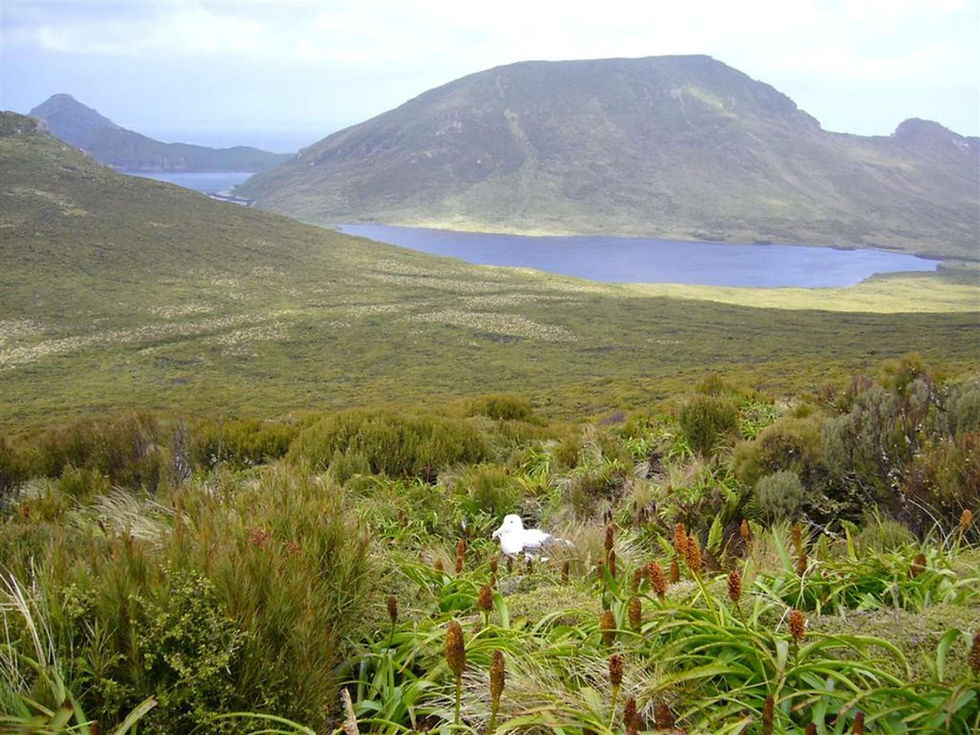
We leave the cold, storm-lashed subantarctic behind us and turn north-east, sailing across the open ocean. Days pass with nothing but horizon—until low land begins to rise from the sea. The Chatham Islands.
As we draw closer, the air softens, carrying salt and earth rather than ice and spray. Seabirds circle above quieter shores of dunes, lagoons, and low forest. These islands—Rēkohu to Moriori, Wharekauri to Māori—sit over 800 kilometres east of mainland Aotearoa, perched on the edge of Zealandia. They rose from the ocean around 3 to 4 million years ago, younger than the subantarctic islands we’ve just left behind, and have since been shaped by wind, erosion, and long isolation.
That isolation created a world of its own, with species evolving in ways found nowhere else. It also shaped the people who arrived here. Moriori reached Rēkohu from mainland Aotearoa centuries ago, likely as small groups of Polynesian settlers who adapted to the islands’ cooler climate, limited resources, and isolation. Over generations, they developed a distinct identity, living across the islands and relying on the sea, birds, and coastal environments to survive.

The first island we land on is called The Pyramid/ Tcharako. This island is only 1.7 hectares in size but is home to thousands of seabirds. Along with other small islands like the Forty-Fours/ Motchuhar and The Sisters/ Rakitchu house the vast majority of the seabirds breeding on the Chathams today. As we pull up onto the pyramid we find the familiar shames of New Zealand fur seal/ Kekeno (Arctocephalus forsteri) laying on the rocks among an unusual looking penguin, larger and unlike any we have seen down in the subantarctic island, we identify it as Chatham Island Crested Penguin (Eudyptes warhami) and were endemic to the Chathams. They were among the largest of the crested penguins and diverged from its closest relative the Erect-crested penguin/ Tawaki nana hī (E. sclateri) about 2 millions years ago, not long after Rēkohu surfaced. Bones of these penguins have been found in middens, so it was likely they were eaten by the Moriori into extinction.

Out of all the offshore islands, Rēkohu holds the highest diversity of seabird species at about 28 being recorded breeding here, and also the highest number of endemics. Some of the new species we see breeding on The Pyramid, with the entire world population of the Chatham Island mollymawk/ Toroa (Thalassarche eremita) breeding only on this small island. There are also two other species of albatross that use Rēkohu as their main breeding ground, the Northern Buller’s mollymawk (T. bulleri platei) and the Northern royal albatross/ Toroa (Diomedea sanfordi), breeding on the Forty-Fours/ Motchuhar and The Sisters/ Rakitchu.

There is also large colonies of Northern giant petrel/ Pāngurunguru (Macronectes halli) here, their Stronghold in Aoteoaroa along with large colonies of the White-faced storm petrel /Takahikare (Pelagodroma marina) making burrows in the shallow soils off these smaller islands. 3 different species of prions, filter feeding petrels such as the Fairy prion/ Tītī wainui (Pachyptila turtur), Broad-billed prion/ Pararā (P. vittata) and the endemic Pyramid prion (P. pyramidalis). A lot of these species were likely breeding on the main islands of Rēkohu but just like Aotearoa, human hunting and introduced mammals likely caused their extinction on the main islands and relict populations persist only on these safe offshore islands, with other species only breeding on the main islands declining rapidly or going extinct, we will be talking about these species when we land on Rēkohu itself.
As we get back on the boat and sail out to Rēkohu we spot an interesting sight, a pod of Orca/ Kākahi (Orcinus orca) hunting a large Basking Shark/ Reremai (Cetorhinus maximus), the second largest shark species. We see the orca biting and hitting its fins with their flukes as they try to immobilize the shark, before eating the liver. Orcas are a rare species in Aotearoa, with only a few hundred living along the coasts, not because they have been hunted, but because New Zealand orca are quite specialized, eating mostly sharks and stingrays, while other orca types such as "Type D" subantarctic orca or larger transient pods found in the open ocean like the Chatham rise that hunt even the great whales and other marine mammals.
Basking Sharks today are threatened by Bycatch and climate change, but in these times, they were very common in our waters, eating small fish and plankton that are much more abundant in these untouched fisheries .

The waters of Rēkohu are a global hotspot for cetacean diversity with 25 different species being recorded here. As we sail we see the pods of large baleen whales like Humpback Whales/ Paikea (Megaptera novaeangliae) and Fin Whale/ Raratahurihuri (Balaenoptera physalus) migrating to the tropics to calf ,Southern Right Whale /Tohorā (Eubalaena australis) in this time are common in this area as this is their summer feeding grounds, but in the modern day are a rare sight. We also manage to find a lot of deep sea species that you would not find so close to land, such as a bull Sperm Whale/ Parāoa (Physeter macrocephalus) and a massive pod of Long-Finned Pilot Whale (Globicephala melas), numbering 1,000 or so, a similar size to the largest known stranding which will happen here at Rēkohu in 1,000 years from now.

We also see pods of dolphins as we sail, with large pods of Common Bottlenose Dolphins (Tursiops truncatus), Common Dolphins (Delphinus delphis) and Dusky Dolphins (Aethalodelphis obscurus) all species commonly seen living and moving around the waters of Aoteoaroa. But one sighting we managed to see today is of the rarest whale we know of, and history is tied to Rēkohu, the first ever sighting of a living Spade-Toothed Whale (Mesoplodon traversii)! These whales belong to a group of whales called the Beaked Whales (Ziphiidae) , a group of poorly understood whales with 24 species found globally.
These whales live in the open ocean and are not common, but Aoteoaroa is a global hotspot for them, with 13 species being recorded here. The Spade-Toothed Whale is the rarest of all, never seen alive and only six specimens have been collected since the first one was found here in Rēkohu from 1872 and 2026 by strandings. From what we know of more common species like Cuvier's beaked whale (Ziphius cavirostris) and the largest in our waters the Arnoux's beaked whale (Berardius arnuxii) even these open ocean mysteries still face climate change, naval sonar scaring them, and accumulation of toxins and microplastics in their tissues, all caused by humans, hurting animals we never have even seen alive before.

After all the sailing we make our way to the shores of Rēkohu, we see the shapes of Southern Elephant Seal (Mirounga leonina) laying on the beach, like only mainland Aoteoroa. Once breeding on the Chathams today they are a rare visitor, along with Leopard Seal/ Pākaka (Hydrurga leptonyx). One of the first birds we spot among the sands and volcanic rocks roosting is the are the two native species of shag, the Pitt Island shag/ Kawau o Rangihaute (Phalacrocorax featherstoni) and the Chatham Island shag /Papua (Leucocarbo onslowi). While both looking very similar, the Chatham shag is larger and related the other blue eyed shags like the Campbell/ Auckland Shags (L. campbelli/colensoi) and the King shag/ Kawau pāteketeke (L. carunculatus), while the Pitt Island shag is related to old world shags, like the Spotted shag/ Kawau tikitiki (P. punctatus) or the Black shag/ Māpunga (P. carbo). Sadly both species today are considered vulnerable, with disturbance from humans, loss of habitat and introduced predators being the threats to these and many other birds
found here.


As we carry on we find ourselves a pair of Chatham Island oystercatcher/ Tōrea tai (Haematopus chathamensis), the only species of oystercatcher that breeds here, in tiny scrapes and kelp piles while foraging for marine invertebrates along the shoreline. These are also the most endangered species of oystercatcher and have declined sharply due to introduced cats and Weka eating the eggs and chicks, stock trampling nests and habitat loss, with the wild population being estimated at only 300, rising after trapping and fencing off stock began in the 1900s.

We also along the tide another small critically endangered bird, the Shore plover/ Tuturuatu
(Charadrius novaeseelandiae). These small plover species were once common not just along the Rēkohu coast, but along coasts of Mainland Aotearoa, and with the introduction of rats and mustelids, were extinct on the mainland by 1870. They did manage to survive here on Rēkohu, but their populations continued to decline until 1900, where a population of about 150 survived on Rangatira (South East) Island. Since the 1990s predator control and captive breeding of this species has managed to help the population grow. They have even been reintroduced to the islands off the mainland, and while some have been lost to rat incursions, small breeding populations can be found on islands like Mangere Island near Rēkohu, Mana Island near Wellington and Motutapu near Auckland, most being founded by captive breed stock. Today their population stands at about 300 as well, but are still dependent on the captive breeding program and ongoing predator control.

As we walk along the beach, we see a Richdale's penguin (Megadyptes antipodes richdalei), a now extinct subspecies or population of the Yellow-eyed penguin/ Hoiho (M.a.antipodes) endemic to Rēkohu. They are a great example of insular dwarfism, with these Richdale's penguins being 15% smaller than the modern Hoiho and 5% smaller than the now extinct mainland Waitaha penguin (M. a.waitaha). They were likely made extinct by human hunting.
We also see Little penguin/ Kororā (Eudyptula minor) burrows along the edge of the beach, the smallest and most common penguin in Aotearoa. We move up into the soil and look inside to see them snuggled up inside. They face a host of threats today such as human encroachment, net entanglement and the biggest threat is cats, dogs and ferrets, preying upon them when they are vulnerable on land, so are considered to be declining in our region
We also spot the burrows of the recently described Whenua Hou diving petrel/ Kuaka Whenua Hou (Pelecanoides whenuahouensis). Sometimes considered a subspecies of the
South Georgian diving petrel (P. georgicus) based on subfossil bones they used to live on the Chatham islands, but today can only be found on Whenua Hou/ Codfish Island, with less than 150 left, making them one of the most endangered birds in Aotearoa. We saw them also on the Auckland islands, meaning they had a much larger distribution, nesting along the sand dunes of Rēkohu, likely declining due to introduced predators and habitat loss.
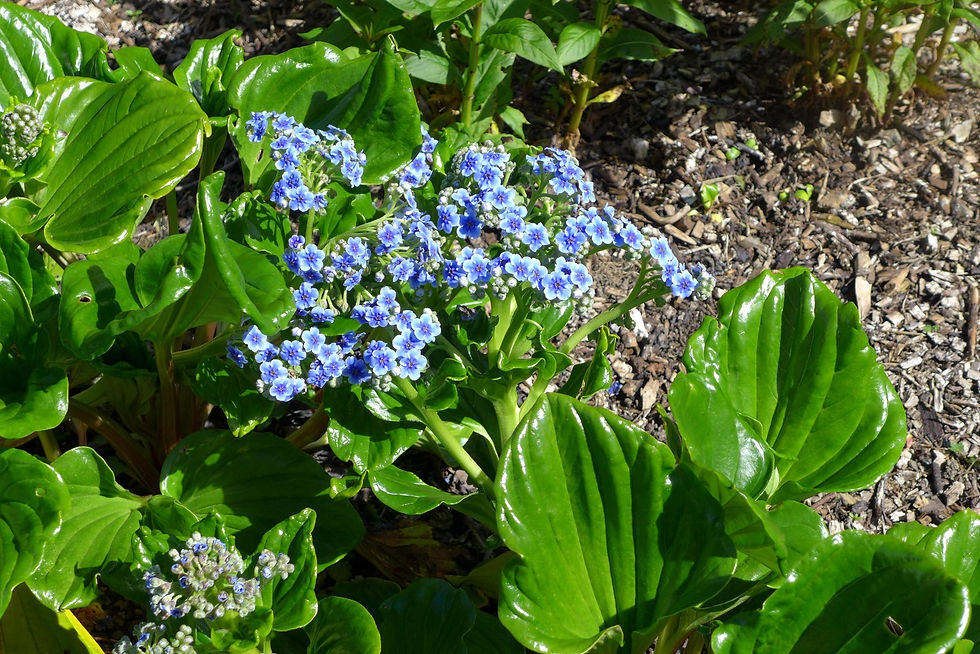
Along the sand dunes we also see the endemic species of megaherb found here, the Chatham Island forget-me-not (Myosotidium hortensia) and the Chatham Island sow-thistle (Embergeria grandifolia). Rēkohu has a lot more coloured flowers compared to the mainland and the trees have larger flesher leaves, adaptations to less sunlight compared to the mainland. Rēkohu is home to 388 terrestrial plant species mostly related to plants in Aotearoa, but 47 are endemic, only being found here. We decide to leave the sand dunes and head into the forests.
As we walk into the forest, it's dense and vaguely familiar to the mainland, with dense scrub protecting us from the rain and strong winds. We look to the longs and undergrowth and see lots of large invertebrates like The Rangatira spider (Dolomedes schauinslandi), Chatham Islands giant click beetle,(Amychus candezei) ,Giant stag beetle (Geodorcus capito), Speargrass weevil (Hadramphus spinipennis), Pitt Island longhorn beetle (Xylotoles costatus), and the Giant stick insect (Argosarchus horridus). A lot of these large flightless species are perfect prey for rats and mice, and now are rare or absent on the main islands where they have been introduced, only surviving on places like Rangatira. We even manage to find the only species of reptile found on Rēkohu, the Chatham's skink (Oligosoma nigriplantare) descendents of grass skinks that rafted here long ago. Just like these large invertebrates, they are now only found on small pest free islands.

We hear as we walk though the bush the sounds of many different bird species, being warmer than the subantarctic islands we came from, with 100 species of bird species and subspecies breeding to the islands. The Chatham fantail/ Pīwakawaka (Rhipidura fuliginosa penita) has more white on the tail, the Chatham tomtit (Petroica macrocephala chathamensis) being larger than its South island counterpart and the Chatham Tūī (Prosthemadera novaeseelandiae chathamensis) being a larger, darker bird with a different, more guttural coughing and whistle song compared to the mainland Tūī.The Chatham Island warbler (Gerygone albofrontata) is endemic as well, being larger and has distinct male, female and juvenile plumages unlike the mainland species, and is also falls prey to nest parasitism by the Shining cuckoo/ Pīpīwharauroa (Chrysococcyx lucidus).
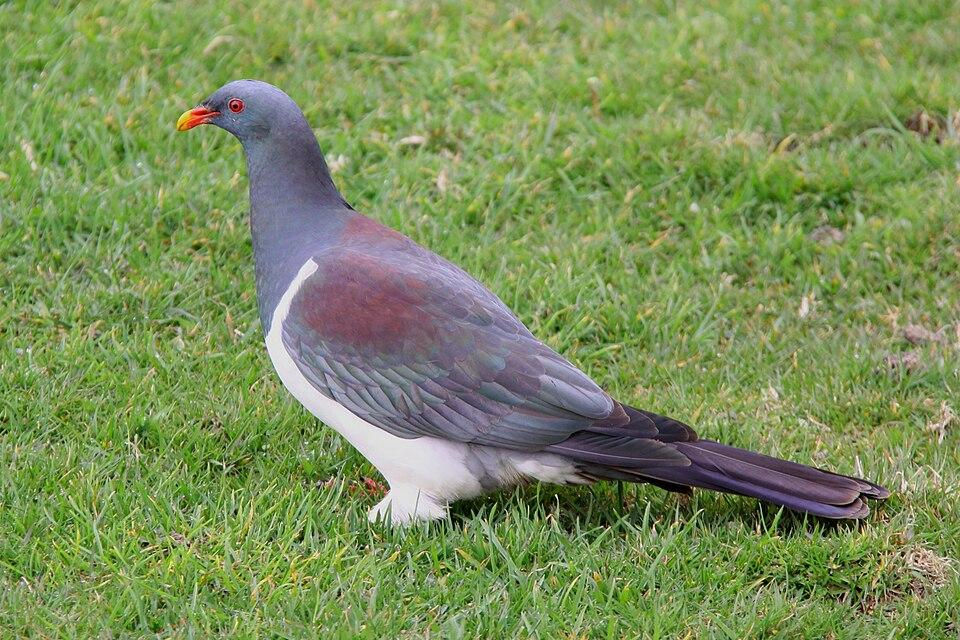
We hear the whossing of wingbeats in the forest, looking up to find it to be made by a Parea/ Chatham Island pigeon (Hemiphaga chathamensis) a close relative of the Kererū/ New Zealand pigeon (H. novaeseelandiae). The Parea is larger than the Kererū, with a smaller head, different plumage and likes to forage on the ground ,distinguishing it as a different species. Once common on the forests of Rēkohu declined due to habitat loss and introduced predators like feral cats, possums, ship rats and weka. They declined until 1989, where there was pest control to help the 45 remaining birds, and the population has recovered well, with an estimated 600 now on Rēkohu.
The forests of Rēkohu are also home to parrots, with a resident subspecies of Red-crowned Kākāriki (Cyanoramphus novaezelandiae chathamensis) but also an endemic species as well, the Forbes’ Kākāriki (C. forbesi), while it was once regarded as a subspecies of Yellow-crowned Kākāriki (C. auriceps) genetics show it is actually a much more ancient species and was around before the red-crowned/yellow-crowned split on Aotearoa. It is much larger than the yellow crown and only found here on Rēkohu. These Kākāriki prefer more closed forest habitat, so declined when most of the forest was cleared and cats were introduced, until the population of only 30 survived on 10 ha Little Mangere Island. Conservation efforts began, removing cats and restoring the forests of 131 ha Mangere Island allowed them to recolonise, and culling of hybrids of the two species prevented them getting lost in the gene pool of the Red-crowned Kākāriki, with 1,000 pure Forbes’ Kākāriki now surviving on these islands.

We see a large bird climbing down from the trees, curious like most parrots are to what was this walking though its home, along with a couple others. This large parrot is the Chatham Kākā (Nestor chathamensis). When they were first discovered, they didn't know if it was a Kea (N. notabilis) or Kākā (N. meridionalis) until the 1990s and they were described as their own species in 2014, splitting about 1.7mya from the other species according to DNA analysis, not long after Rēkohu emerged out of the ocean. While similar in size and behaviour to Kākā, it has larger legs and a wider pelvis suggest it was a poor fighter, much better adapted to walk and climb. Its beak is also in between the short beak of the kaka and the long beak of the kea. This bird is only known from subfossil bones and was never seen alive, likely going extinct not long after Morioroi arrival, likely hunted for food.
As we wander deeper into the bush, we also see more burrows in the ground that look like those made by seabirds ,home to 3 very rare or extinct species and considered some of the rarest birds in our region. The Chatham Island Taiko/Tāiko (Pterodroma magentae) is the largest of these endemic petrels and one of the rarest seabirds alive today. It was first found in 1867 at sea and was named the Magenta petrel after the Italian expedition’s ship and was thought extinct for 111 years until conservationists investigated sightings reported by locals and managed to catch one in 1978. They used to breed all over the island, but today can only be found breeding at Tuku Nature Reserve, an inland forest patch on private land, now with a predator proof fence to protect them from cats, rats and pigs. It's thought that less than 200 remain, with only 20 burrows known

The next species is the Imber's petrel (Pterodroma imberi).This species was never seen alive, but has been found with the other two species, suggesting they all bred in similar habitats. It was a medium-sized gadfly petrel, slightly larger than the Soft-plumaged petrel (P. mollis), its closest relative splitting from them around 1.37 million years ago. Imber’s petrel had proportionately longer legs than similar species but its skeleton is not well known. It likely managed to survive until the 19th century, until it was driven to extinction by human collecting, habitat destruction and introduced predators.
The smallest species found is the most common today, but it's still considered one of the world's most endangered seabirds, the Chatham petrel/ Ranguru (Pterodroma axillaris), once breeding in these dense inland forests, now they can only be found breeding on Rangatira (South East Island), due to introduced mammals. These species were in decline in the 1990s, because the last remaining population was competing for limited burrow space with the larger and more abundant Broad-billed prion with 330,000 breeding on the island. To help this, they translocated about 400 chicks on predator fenced areas on Pitt island and mainland Rēkohu, with new colonies breeding there, probably for the first time since mammal introductions began.

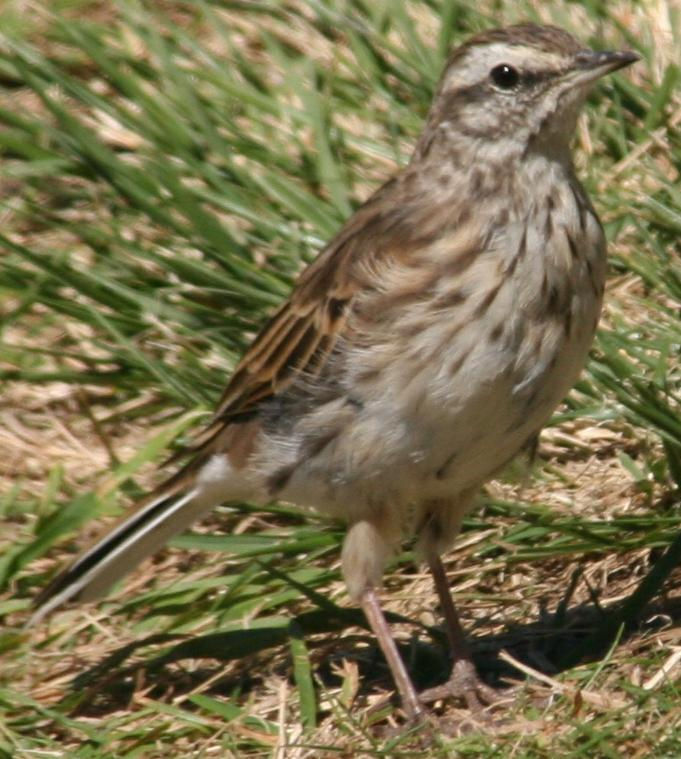
We carried on to see a trail pushed into the undergrowth, as we followed to find a large New Zealand sea lion/ Pakake (Phocarctos hookeri). While today they are only found in the subantarctic islands, both Aoteoaroa and Rēkohu had healthy populations 1,000 years in the past, with a distinct population numbering 50,000 living here. They sadly likely went extinct due to Moriori hunting them to extinction within 200 years of their arrival to Rēkohu. In the trail left by the large marine mammal, we find a small Chatham Island pipit (Anthus novaeseelandiae chathamensis) foraging the disturbed insects.
We see more flowers as we move into the forest and see a male Chatham Island bellbird
(Anthornis melanocephala). While similar to the Bellbird/ Korimako (Anthornis melanura) on Aoteaora, it was at least 10% larger, with longer wings and legs while the males have more blueish heads and have a bright yellow iris compared to the bright red of its mainland relatives, along with a louder song. These birds were common in the mainland forests around Waitangi, the main settlement of Rēkohu right up until the 1880s, declining due habitat loss and introduced predators until it went extinct in 1906.

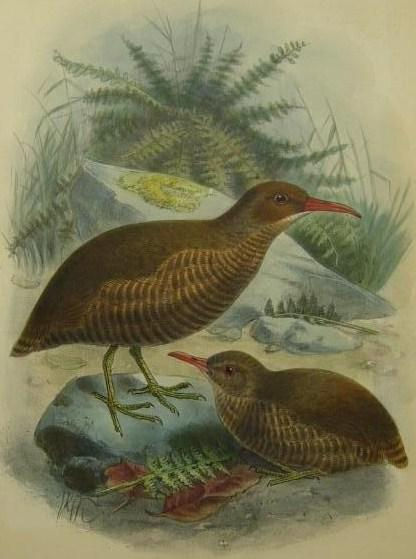
As we look on the ground we see plenty of probe holes, but they can't be of kiwi. Deeply endemic animals like moa, kiwi and kakapo never made it to Rēkohu due to already being flightless at the time of Rēkohu rises out of the ocean, but this niche of course was not left open and was occupied by the rails and snipe that made their way to Rēkohu. The smallest holes actually belong to one of the 3 endemic rails found on Rēkohu, the Chatham Island rail/ Mātirakahu (Gallirallus modestus). This species was the smallest at about 60 grams, and looked like a mini kiwi, brown with pale-tipped ventral feathers, a long decurved brown bill, very short tail, and brown legs. The long bill would be used for probing, finding small animals like amphipods and other small invertebrates. Once common across Rēkohu, they went extinct on the main islands due to introduced predators, and surviving only on Mangere Island where it was discovered in 1872 by Henry Travers. After some 34 specimens were collected and some observations were made, cats made it to the island and drove the species to extinction by 1894.
The next largest probe holes are made by the Chatham Island snipe (Coenocorypha pusilla) and at 80 grams, was the smallest of all the snipe found in our region. These snipes declined due to the pacific rat, and later cats until there were only populations on Rangatira (South East Island) and the other small islands with forest and no mammals. These snipes like the dense ground cover, rich in small invertebrates to eat. While efforts to bring the species into captivity were not successful, removal of mammals and translocations have helped the species begin to recover, with an estimated 2000 or so birds alive today, with hopes to reintroduce them to predator proof areas on Pitt and mainland Rēkohu. But as we look over to our side, we see a mystery unfold

Now if you look at most of these islands, each island has its own species or subspecies of endemic snipe, but Rēkohu likes to buck the trend. We see a pair of snipe probing in the dirt, but they don't look like Chatham Island snipe, they are much larger, much like the Subantarctic snipe (C. aucklandica) we saw down south. These are other species of snipe found on Rēkohu, the Forbes' snipe (C. chathamica). These snipes are only known from skull material, with much longer beaks compared to the smaller Chatham Island snipe (C. pusilla). There is no other island group known with two species of snipe, but there is a mystery here. There is no way to tell the bones of the two species apart other than skulls, so bonebeds of spine bones could be of one or both species but we can't tell. The first hypothesis is that the Forbes' snipe first came to Rēkohu, then the Chatham Island snipe arrived about 42,000 years ago from the Snares Island snipe (C. huegeli), becoming smaller to avoid competing with the Forbes' snipe. An alternative hypothesis is that a single snipe species only was present, but was formerly much more variable in size, with only the smallest individuals represented by the modern population. This may also explain sightings of ‘giant’ snipe by rangers on Rangatira from 1999-2001. The birds were not photographed or caught for measuring and genetic sampling, meaning sadly this mystery remains unsolved.

As we push though the forest, we stop and look back to see what birds have followed us and we manage to see one of the most famous bird from Rēkohu, and one of the greatest conservation stories in our region, the Black robin/ Karure (Petroica traversi) as they catch insects that are disturbed by our movements. These robins are twice the size of the local tomtits, and are completely black. They are also more specialized and more reluctant to fly, only flying branch to branch in its dense forest home. This makes this one of the species most impacted by habitat loss, introduced mammals and nest predation by starlings drove the species to near extinction in the 1980s, getting down to the point where there were only 5 left, and only one breeding female left named “Old Blue”.
Using cross fostering, they took the first clutch and gave the eggs to tomtits, and then Blue laid and raised another clutch, managing to raise 11 chicks over her lifetime. This worked and along with the hard mahi done by Don Merton and his team saved the species from extinction, with now an estimated population of 300, all descended from Old Blue, making her related to every living black robin. While they recovery is amazing, it has not been without issues, with black robins having extremely low genetic diversity, leading to a maladaptive gene, where females would lay eggs on the rims of nest spread to half of the population due to conservationists putting the eggs back and allowing that gene to be passed on. Luckily though for the robins, inbreeding depression has not really impacted them too much, already coming from an already small population that have already lost alleles that could cause issues. While they are doing much better, their full recovery is stalled by lack of habitat and introduced mammals, so once forest restoration and predator control is done on the main islands, the Black Robin could return to its past range, and make one of the greatest comebacks in conservation history.

We leave the dense forest and make our way more into the lakes and wetlands in the center of the island, as we come across a small freshwater lake, with flax and tussock grass bordering it. As we wander past we see the shape of rail darting through the undergrowth, looking like patterns of a Dieffenbach's rail/ Moeriki (Gallirallus dieffenbachii) , the second endemic rail species found on Rēkohu. This one is much larger than the Chatham Island rail, at about a foot long and 340 grams, like a bulky Banded rail/ Moho pererū (G. philippensis) with a more curved bill. It had reddish brown eyes, and light brown legs. The head was dark rusty brown with a grey stripe above the eyes and grey on the throat, back and breast feathers were yellowish-brown banded with black, the fore neck and belly black barred with white, and the under-tail black with reddish markings. Elderly Moriori considered them quite tame, a common trait on isolated island birds, unaware of these novel predators. Common in the forest and coastlines of Rēkohu, once introduced mammals were introduced they declined, surviving only on Mangere Island until 1890

As we look on the lake we spot a New Zealand little bittern/ Kaoriki (Ixobrychus novaezelandiae) in the reeds. They live in these wetlands just like on mainland Aotearoa, but likely declined due to the same reasons as well, becoming extinct here likely with habitat loss and the introduction of feral cats and rats. We also spot the familiar sight of long wide bills of the filter feeding Scarlett's duck (Malacorhynchus scarletti) also calling the lagoons and lakes of Rēkohu, likely becoming extinct here for the same reasons, hunting by Morioroi and introduced mammals. The birds all around the area go silent, as New Zealand falcon/ Kārearea (Falco novaeseelandiae) grabbing the Kaoriki as it tries to get away, but the Kārearea lands on the bank, and using its beak and talons, manages to kill its quarry. This Kārearea population likely declined with loss of prey, but there is evidence they managed to survive on Rēkohu until the 1800s, with an egg found and other potential sightings dating to that time.
We grab our net to take a look at the fish found in these waterways, with a lot of species that can be found on mainland Aotearoa living here They include Longfin eel (Anguilla dieffenbachii), Shortfin eel (A. australis) Lamprey (Geotria macrostoma) Common bully (Gobiomorphus cotidianus) , Redfin bully (G. huttoni) Common smelt (Retropinna retropinna)
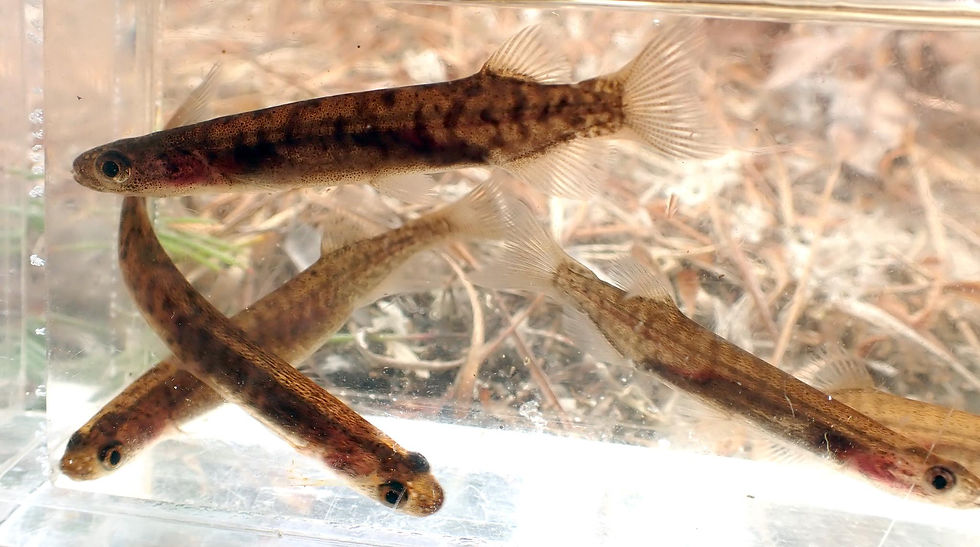
Giant kōkopu (Galaxias argenteus) Banded kōkopu (G. fasciatus) Koaro (G. brevipinnis) and Inanga (G. maculatus). We do find distinct fish though, the only one endemic to Rēkohu the Chatham mudfish (Neochanna rekohua). Discovered in 1994, these mudfish are endemic to dark, peat-stained waters, small lakes all across Rēkohu.
In the reeds along the side of the wetland, we manage to spot a quite cryptic bird, the Chatham Island fernbird (Poodytes rufescens), while similar to the Fernbird/ Mātātā (P. punctatus) even one being considered a subspecies but it was slightly larger with unspotted white underparts, a chestnut-brown crown, a distinct white loral spot, and a dark red-brown back. Like most other of these extinct species, they used to live all across Rēkohu but historical reports only come from Mangere Island, declining on the mainland due to introduced mammals. They were common there in the 1870s, but once cats were introduced they likely went extinct quickly, with the last bird being shot in 1895.

We move more into the open areas, the "The Clears” as they are often referred to. The first large birds we see are a pair of large ducks, with distinct colours followed by a line of ducklings. Giving them a closer look, we can manage to identify them as a pair of Rēkohu Shelduck (Tadorna rekohu). This is the latest species described, being named in 2025 and is a close relative of the Paradise shelduck/ Pūtangitangi (Tadorna variegata) found on mainland Aotearoa but had longer legs, longer skull, shorter wings and was over 300 grams heavier than their mainland counterpart, splitting from them about 400,000 years becoming its own species as it became more terrestrial, almost like a little moa as it was one of the large herbivores of Rēkohu
Following the family is a large reddish brown bird with a downcurved beak coming up behind the pair, and managing to snag a duckling in its jaws before running away from its parents chasing it away from the remaining brood. While this bird looks a lot like a Weka (Gallirallus australis) they won't be introduced here until the early 1900s and along with that beak.. This seems to be a Hawkins' rail/ Mehonui (Diaphorapteryx hawkinsi), the largest land bird found on these islands, and likely the largest predator. At 40cm tall and 2 kilograms, it was slightly larger than a weka, and while was extinct before Europeans ever saw it, Moriori stories tell us about the birds colors and habits like preferring open areas, its colors and it spent a lot of its time rooting in the ground like a pick looking for invertebrates… sounds almost like a kiwi dont it? While it seems to have been less predatory than Weka, the occasional lizard or ducking seems to not be out of the question. Bones show that this bird was once numerous on Rēkohu, showing up in middens as well, likely a food source for Moriori. Their date of extinction is unknown, but detailed reports of the bird suggest they may have survived into the early 1800s.

As we leave these open areas we make our way down to the Te Whanga Lagoon, a large brackish lagoon in the center of Rēkohu covering an area of 160 square kilometers. A large shallow lagoon like this is a hub for bird life, and we manage to spot a lot of these birds around here as the lagoon empties into the ocean, creating a sheltered habitat for fish to grow. The first thing we see is the large black and white shapes of Chatham Island swan/ Matapu (Cygnus sumnerensis chathamensis), a subspecies of the New Zealand swan/ Matapu (C. s. sumnerensis). These swans were first described as their own species, and then in 1998 considered the same as the Black Swan (C. atratus). This was until 2017 where it was split again based on DNA and anatomy. The population on Rēkohu has slightly less robust legs, but both subspecies were larger than the Black swan at about 10kg and had a lot of the classic traits of being more terrestrial with longer legs and shorter wings, adapting to living and foraging on the ground. These large birds were likely a good feed for the Moriori and Maori, and likely went extinct in the 14th century.

We see this trend continue with another large species of duck, sitting close to the edge of the lagoon, dabbling in the shallow waters. This is the largest and potentially the most interesting duck of Rēkohu the Chatham Island duck (Anas chathamica). This duck first off was huge, weighing up to 2 kilograms, larger than even both native shelduck species. It had a long beak, and long legs but, proportionately, its wings were shorter, and along with only being found on the mainland Rēkohu, suggest that this species was flightless. It also had the impressions of salt glands, meaning it may have lived in these lagoons but also along the coast, using their glands to expel salt from the sea water. On its arms as well it had large wing spurs which would have been used to fight off others of its kind, which means it was a very territorial bird. Based on its skull, it looks like it was a large herbivore, feeding on vegetation on land and dabbling in the water, along with small invertebrates, such as crabs and shellfish.
When this duck was first described in the 1950s it was placed into its own genus because it looked so different from other ducks, called Pachyanas which means “thick duck”. This was until 2014 were they looked at their DNA and found that the Chatham Island duck’s closest relatives were the three species of brown teals, the Brown teal/Pāteke (A chlorotis), Auckland Island teal/ Tētē kākāriki (A. aucklandica) and the Campbell Island teal (A. nesiotis). It split from them about 1.8 million years ago and are a great example of insular gigantism, becoming over 3 times the size of the Pāteke, its mainland ancestor and adapting to take a completely different role in the ecosystem. Sadly for this duck, its size and its spurs did not save it from extinction, as it being flightless made it easier for Moriori to catch for food and was likely one of the first species to go extinct after Moriori arrival.


Looking back on the river, we can also see flocks of Brown teal/Pāteke (A chlorotis) dabbling on the lagoon. Just like on mainland Aoteoroa, they were the most common duck on Rēkohu and were a food source for Moriori. That changed when mammalian predators (cats, rats, and pigs) and the drainage of wetlands caused them to become locally extinct on Rēkohu by 1925. Even on the mainland this continued, going extinct on the South Island in 2013 until the last populations remained in the North Island. With the help of predator control and captive breeding programs done at places like the Otorohaunga Kiwi House have managed to help them begin to recover, with now 2,500 living across Aoteoroa, being reintroduced to the South Island in 2017 from captive-bred birds. They have not been returned to Rēkohu yet, but discussions are taking place to reintroduce the species back to this part of
their range.
Other mainland ducks you may be familiar with used to live on Rēkohu but due to hunting and introduced mammals, they have disappeared. We see the New Zealand scaup/ Pāpango (Aythya novaeseelandiae) dabbling and diving in the lagoon. These ducks are diving ducks and dive 3 meters underwater and hold their breath for a minute, meaning they can find food out of reach to other ducks. The Australasian shoveler/ Kuruwhengi (Spatula rhynchoti) is another species we see out there, and is a specialized filter feeding duck, using its large, shovel shaped beak and lamellae to filter the food from the water. Both species did breed here based on DNA and subfossil evidence, but likely went extinct due to Moriori harvesting shortly after their arrival. There are occasional Australasian shovelers sighting on the islands from vagrants which means they could come back, either on their own steam or reintroduced by us.

A call arrives to meet the boat at the edge of the lagoon, as we make our way to the estuary as we look though the dense bush to find a Chatham Island Coot (Fulica chathamensis). It looks similar to the New Zealand Coot (F. prisca) we saw on the mainland, though this one looks to be larger at 1.9 kilograms being the largest coot known. It did not look too different but its long neck and disproportionately long legs make it stand out from other species. It also had large salt glands, meaning it was well at home in these brackish waters. Its bones are common in middens, so were a food source for Moriori and likely went extinct shortly after their arrival.
The boat is not far from us as we see it up the coastline. As we make our way over we spot a dead fur seal pup on the beach, with a flock of New Zealand raven (Corvus moriorum) scavenging on the meal. This population was one considered its own species, but genetics show they all split about 130,000 years ago. The Cathams subspecies (C.m.moriorum) was the largest of the 3, with the South Island subspecies (C.m.pycrafti) coming in second and the North Island third (C.m.antipodum). Like their mainland relatives they likely died out due to human hunting and introduced predators.
In the water as we meet the boat we see a somewhat familiar shape, this looks like a merganser the Chatham Island merganser (Mergus milleneri). It was considered the same as the New Zealand merganser/Miuweka (M. australis) until 2014 where they were considered their own species. The Chatham species was more marine, with larger salt glands and stable isotopes showing that they lived along the coasts, lagoons of Rēkohu but did fine in freshwater as well.. They were also smaller than the mainland species, with a shorter beak and wings, likely meaning it was not as well flighted. Fossils are widespread across the main island and they likely went extinct not long after Moriori arrival, with their bones being found in their middens.

As we leave the shores of Rēkohu behind us and watch the islands fade back into the Pacific mist, it’s hard not to think about how much survives here only because people chose to act before it was too late.
Today, conservation across these islands has become part of something much larger. Through the Island-Ocean Connection Challenge (IOCC), huge restoration projects are being planned across Aotearoa’s islands, including Rakiura/ Stewart Island, the Auckland Islands/ Maungahuka, and the Chatham Islands/ Rēkohu. The goal is ambitious: remove invasive predators at an island-wide scale and reconnect entire ecosystems, allowing native species to recover naturally.
On 96,000 hectere Rēkohu, that could mean seabirds returning to the main islands in huge numbers once again, forests recovering further, and species now restricted to small offshore refuges reclaiming parts of their former range. On the 46,000 hectere Auckland Islands, plans to remove pigs, cats, and mice could restore one of the largest and most intact subantarctic ecosystems on Earth. And on 168,300 hectere Rakiura, predator removal would create an enormous safe haven for species like Kiwi, Kākāpō, Kākā, and countless seabirds and reptiles.
We’ve already seen what this kind of work can achieve. Black robins recovered from just five birds. Shore plovers returned from the edge of extinction. Seabirds have recolonised restored islands. Forests once stripped bare are alive again with birdsong.
These islands show that extinction is not always the end of the story.
With enough time, effort, and protection, ecosystems can recover—and some of the wildest places in Aotearoa may yet become whole again.
References
Home page | New Zealand Birds Online. (n.d.). Www.nzbirdsonline.org.nz. https://www.nzbirdsonline.org.nz/
Birds of the Chatham Islands .https://www.doc.govt.nz/Documents/science-and-technical/Birds_of_the_Chatham_Islands.pdf
Miskelly, Colin, et al. “Additions to the Chatham Islands’ Bird List, with Further Records of Vagrant and Colonising Bird Species.” Notornis, vol. 53, no. 2, June 2006, pp. 213–228, www.researchgate.net/publication/278038285_Additions_to_the_Chatham_Islands
“Plantlife – the Chatham Islands.” Chathamislands.co.nz, 2022, chathamislands.co.nz/our-islands/environment/plantlife/
“Giant Spiders and Other Critters of Rangatira Island, Chatham Islands | Te Papa’s Blog.” Te Papa’s Blog, 12 Apr. 2018, blog.tepapa.govt.nz/2018/04/13/giant-spiders-and-other-critters-of-rangatira-island-chatham-islands/
RNZ. “Hunted to Extinction - the Chatham Island Sea Lion.” RNZ, 19 July 2016, www.rnz.co.nz/national/programmes/ourchangingworld/audio/201808840/hunted-to-extinction-the-chatham-island-sea-lion.
“Oligosoma Nigriplantare | NZHS.” Reptiles.org.nz, 2021, www.reptiles.org.nz/herpetofauna/native/oligosoma-nigriplantare
“Species Spotlight: Chatham Island Mudfish - Chatham Islands Landscape Restoration Trust.” Chatham Islands Landscape Restoration Trust, 2019, www.chathamrestorationtrust.org.nz/resources/blog-and-news/spotlight-chatham-mudfish/
“Three Prime New Zealand Islands Join Global Restoration Campaign.” Govt.nz, 2025, www.doc.govt.nz/news/media-releases/2025-media-releases/three-prime-new-zealand-islands-join-global-restoration-campaign/